
Story #5 Was your house ever a summer home?
Some founding Omaha Country Club members loved the peaceful setting so much that they built summer homes along the west side of the golf course on what was then Rose Hill Avenue (now North 56th Street). The road earned its name from the wild roses that once grew across the hillside and fields.
These homes helped spark the growth of a small residential community around the Club — a quiet retreat at the edge of the city.
While nearby roads like Blondo Street and 52nd Street were still unpaved, North 56th Street was brick-paved — and it remains the only visible brick street in the historic district today.
Many of these houses began as seasonal getaways, offering porch views of the greens and cool summer breezes drifting across the course… the perfect escape for families who wanted to “go to the country” without leaving Omaha.
Two of those early country homes were:
Villa Acres | 2218 N. 56th Street
What began as a humble 10-by-12-foot frame house in the late 1880s became one of the most striking homes in the Country Club neighborhood.
Built in 1889 for the Alfred “Axel” Smith family as a Queen Anne Victorian farmhouse, the property sat in open countryside at the time.
In the 1920s, investor and executive F.J. Farrington and his wife Katie (Van Camp) transformed the home into an estate they renamed Villa Acres. They hired architect Harry Lawrie to redesign and enlarge the house, removing its gingerbread trim and front porch and reshaping it in the English Tudor style with stucco walls, half-timbered gables, and a sunroom.
Farrington didn’t stop at the house — he added a greenhouse, smokehouse, and mushroom house; planted an orchard and vineyard; and laid out both country and formal gardens. After F.J.’s death in 1932, the home was sold.
2310 N. 56th Street
In October 1900, insurance executive and founding Omaha Country Club member Archibald “A.J.” Love purchased land in the Rose Hill Addition for $1,000 and built a summer home. His primary residence at the time was at 116 N. 38th Street in Omaha’s Gold Coast.
In 1914, Mr. and Mrs. Love moved to another country property outside the city and developed the Loveland Addition — which still carries his name today.
By the 1910s, North 56th Street already had a strong identity — a street of distinctive country homes, personal histories, and architectural character that foreshadowed the high-quality residential district that would follow.
According to our calculations, Mr & Mrs Love’s summer home was just 3 miles from their primary residence. While it wasn’t a long distance, it was obviously a nice change of scenery being “out in the countryside.”
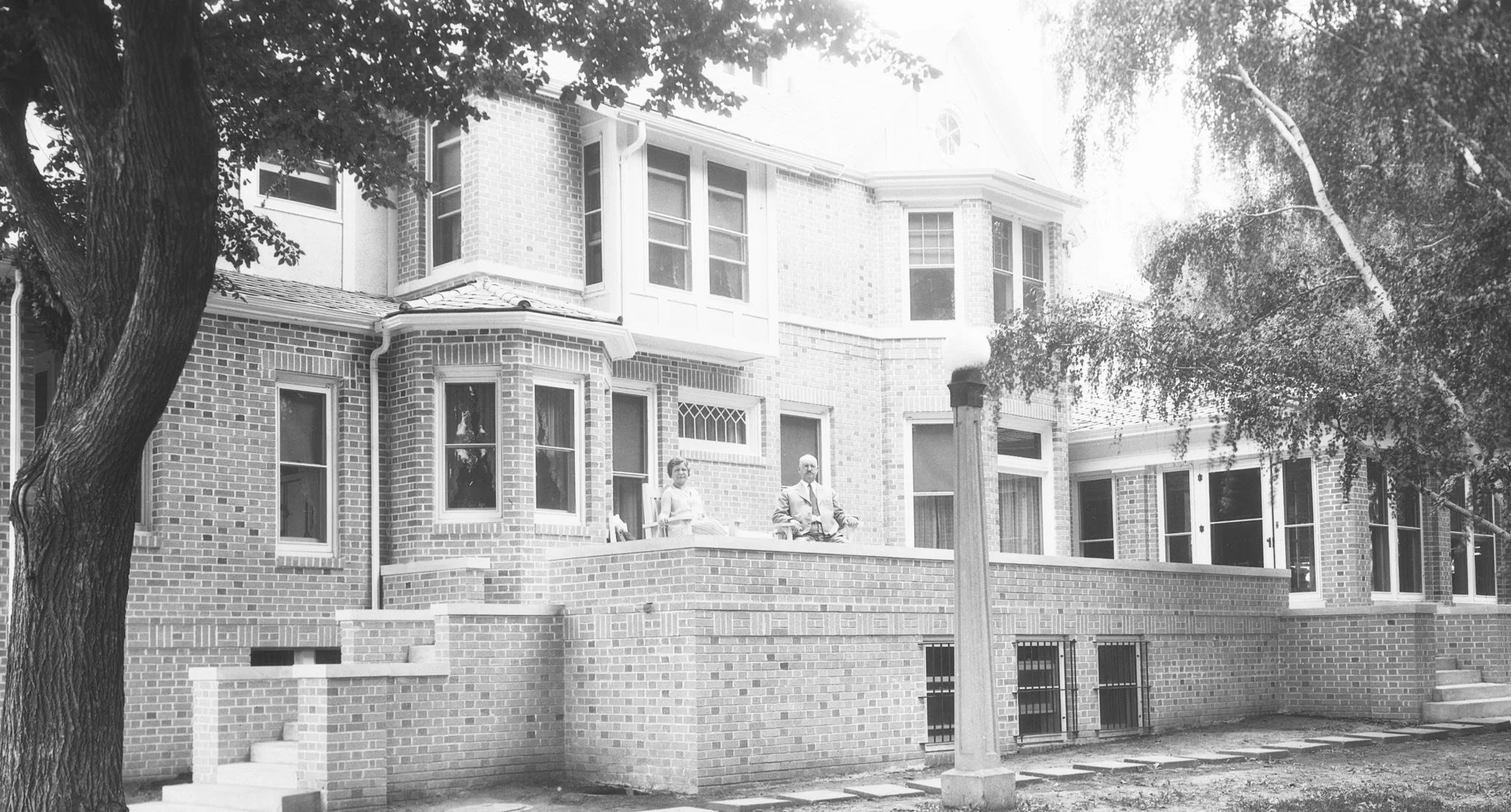
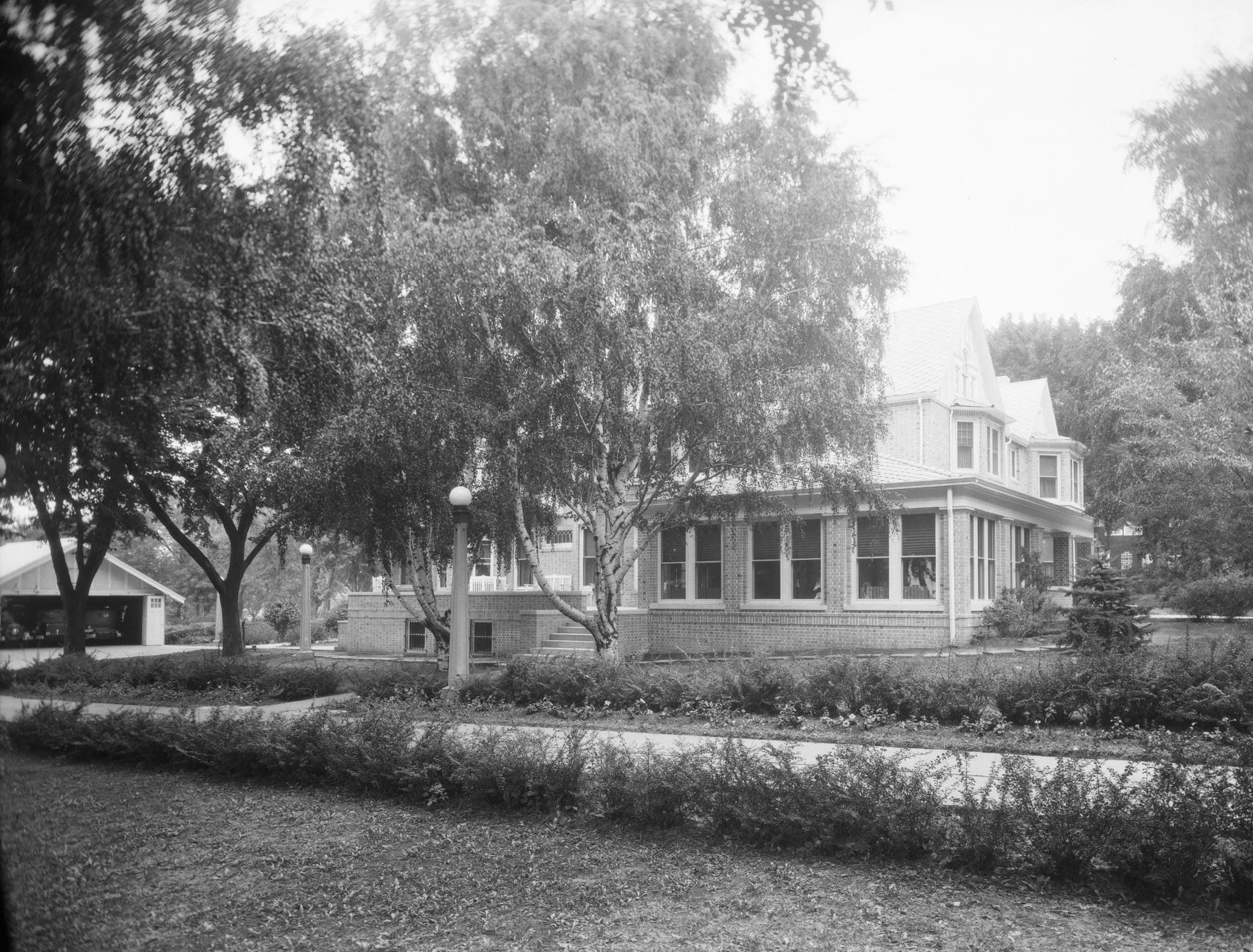
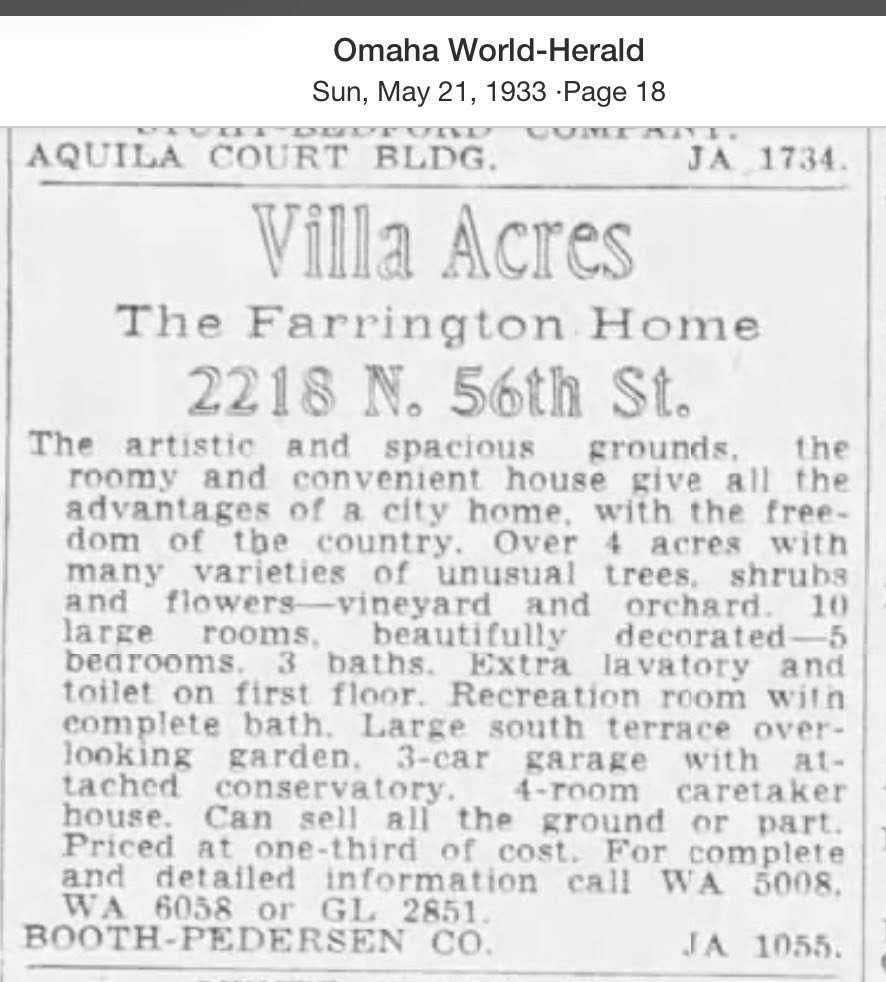
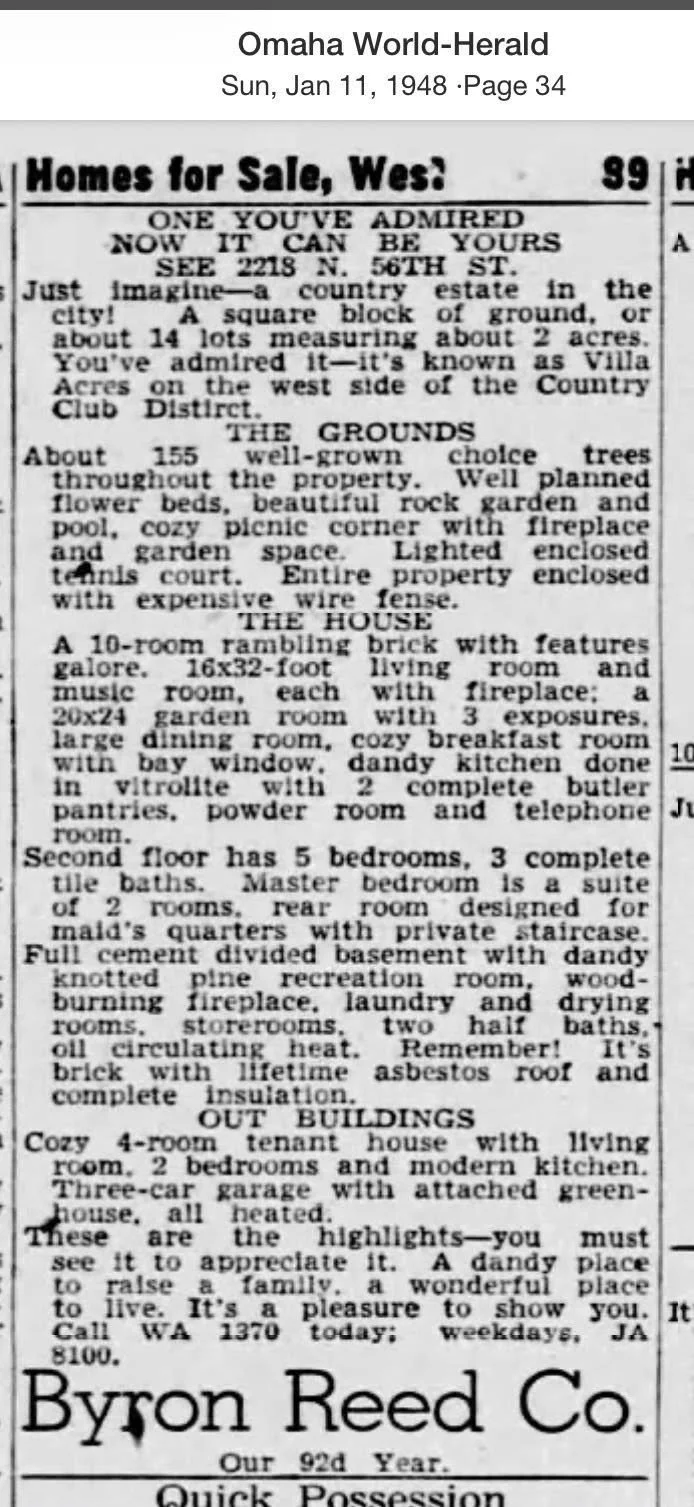
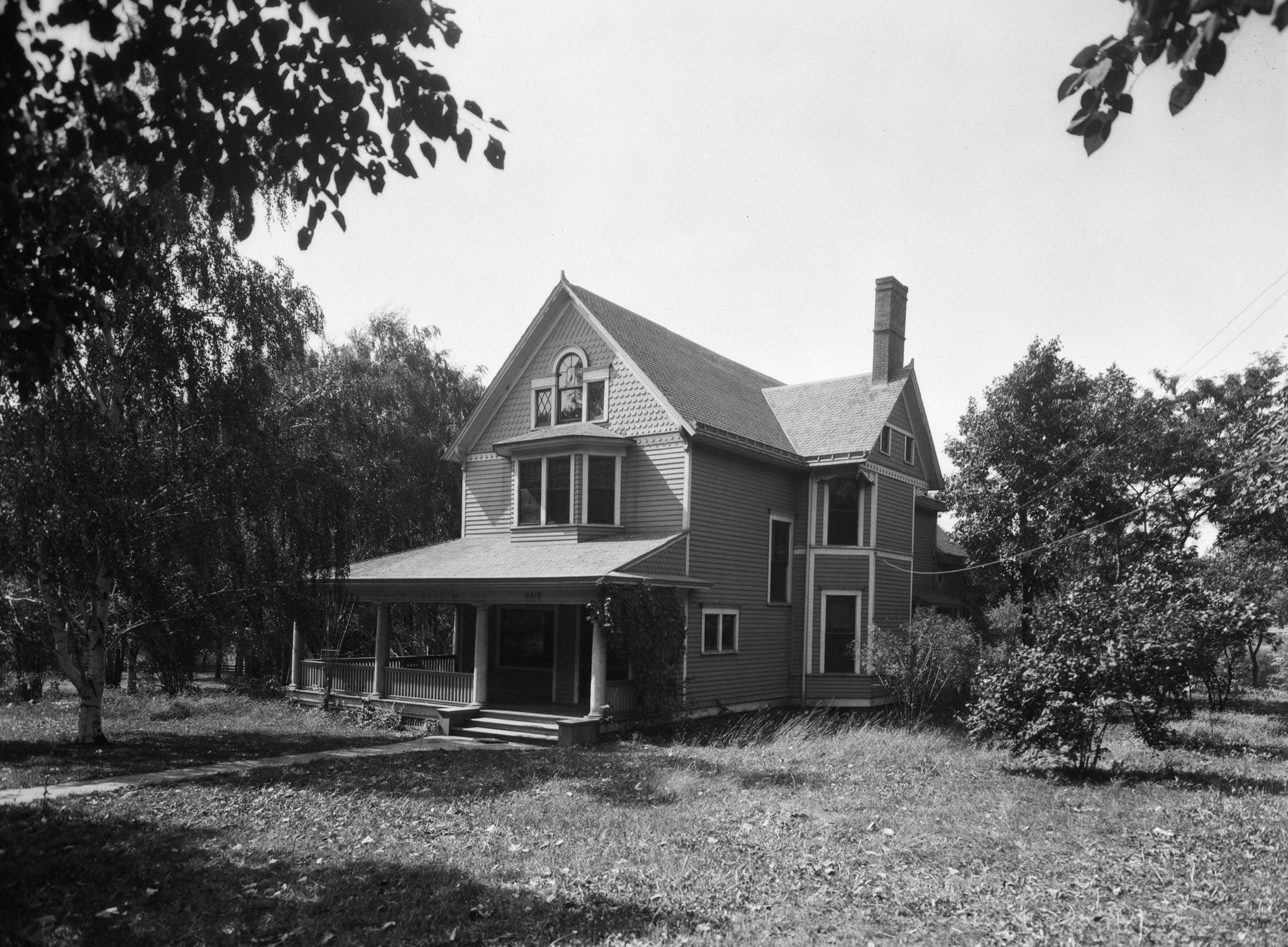
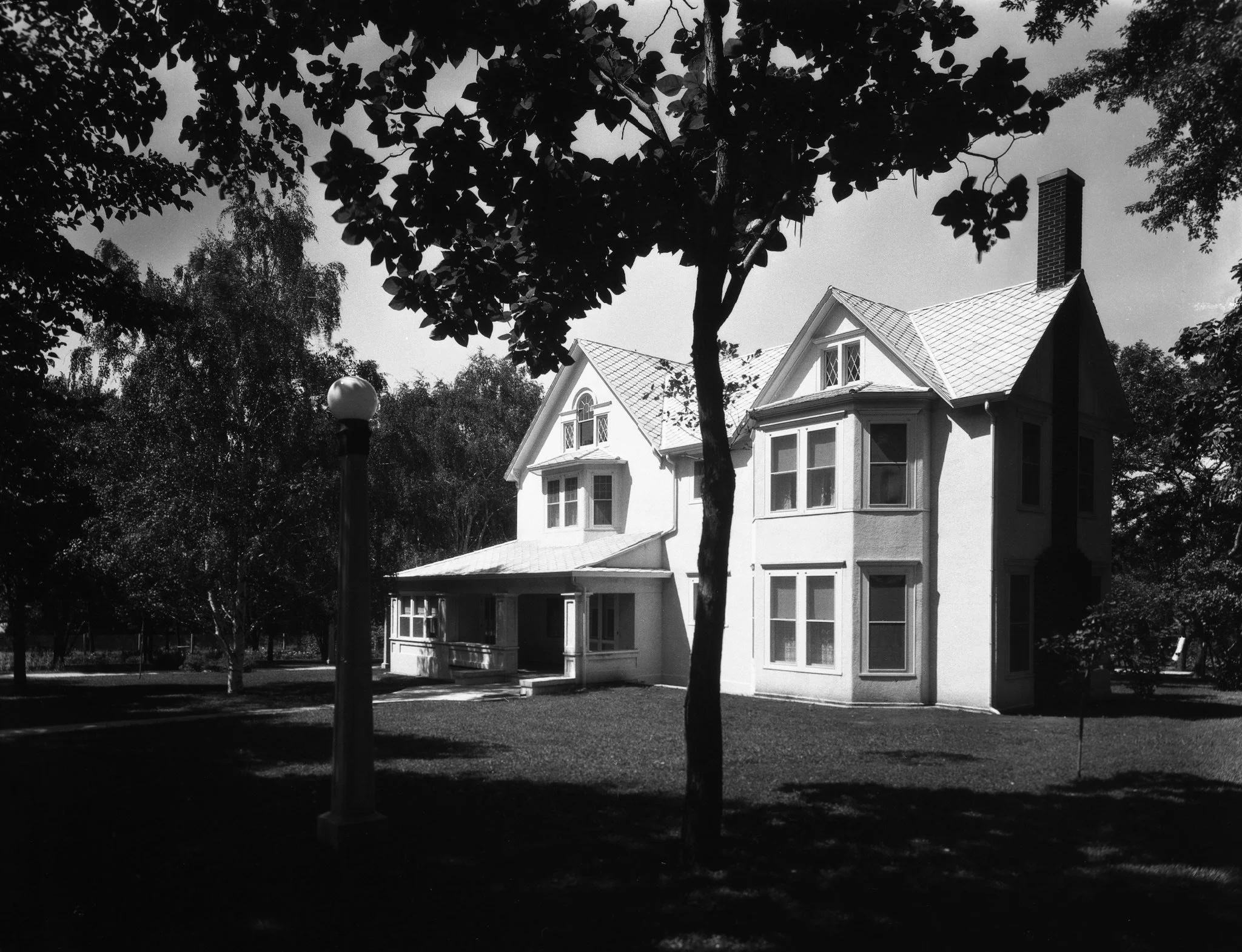
Photo captions:
This photo from the Durham Museum Archives shows Mr. & Mrs. Ferrington enjoying the porch of ‘Villa Acres’ on June 17, 1926. (BF241-103)
Notice the 3-car garage behind Villa Acres in this photo from the Durham Museum (BF241-078).
No caption
No caption
Photo of the original frame house at 2218 N. 56th Street. Courtesy the Durham Museum archives. (BF241-074)
This photo, from 1921, depicts the first transformation of the Fred Ferrington home at 2218 N. 56th Street from the Durham Museum Archives. (BF241-075)
