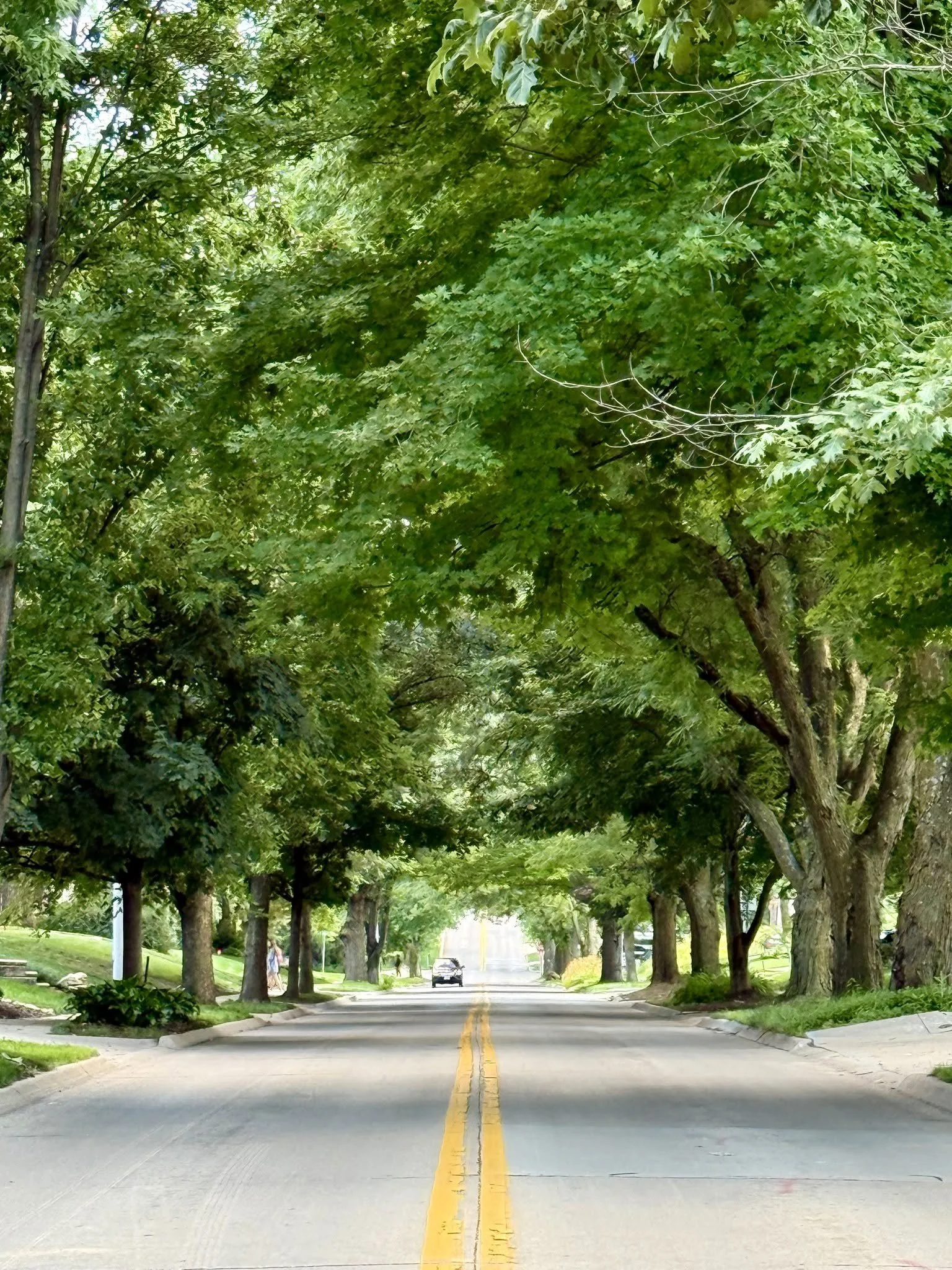
Story #57: The Trees That Define Country Club
Few things define the Country Club Neighborhood more than its magnificent tree canopy. Long before many of today's trees reached their impressive size, the Metcalfe Company understood that mature trees would be just as important to the neighborhood's identity as its beautiful homes. As the former Omaha Country Club golf course was transformed into a residential community, every effort was made to preserve as many existing trees as possible. Nearly a century later, those trees continue to provide beauty, shade, wildlife habitat, and a sense of place that makes Country Club unlike any other neighborhood in Omaha. As we celebrate 100 years of the Country Club neighborhood, it's worth remembering that some of our most important landmarks aren't made of brick or stone, they're living ones.
To help explain why trees matter so much, we asked Graham Herbst of the Nebraska Forest Service to share his thoughts:
Why Trees Matter
By Graham Herbst, Nebraska Forest Service
Nebraska isn't known for its forests. Before European settlement, the Great Plains were vast grasslands with narrow ribbons of trees following rivers and streams. That history gives us something special today: our community forests are largely the result of intentional choices. The trees that line our streets didn't simply happen, they were planted and cared for by generations of residents. Each of us has a role in continuing that story.
There are many reasons we plant trees, but one of my favorites reaches back hundreds of thousands of years. Our early human ancestors lived in landscapes much like Nebraska's. A tree often meant water, food, shelter, firewood, and, perhaps most importantly, shade. While our lives have changed dramatically, our instinctive attraction to trees has not. We are still drawn to them because, deep down, they represent comfort, security, and life.
Trees also create a powerful sense of place. Even without knowing one species from another, we recognize neighborhoods by their trees, their size, shape, colors, and the way they frame our streets. The plants we grew up around become woven into our memories. A familiar scent, flower, or leaf can instantly transport us back to childhood.
When we plant and care for trees, we're investing in far more than landscaping. Our community forest is green infrastructure that improves air quality, cools our neighborhoods, supports wildlife, increases property values, and benefits public health. Just as importantly, it creates the places where memories are made.
Although I no longer live there, this area of Omaha will always feel like home because of its trees. Towering silver maples shaded endless games of tag until the streetlights came on. The scent of bridal wreath each spring still takes me back to my childhood. The trees where my friends and I built forts are gone today, but the memories remain. That's the lasting gift of a community forest—it becomes part of who we are.