Story #62: - Oscar T. Bowles – Architect
In the early 1930s, architect Oscar T. Bowles made a name for himself in Omaha’s neighborhoods including Country Club, Happy Hollow, Fairacres and Westside.
Bowles started out in his hometown of Central City, Nebraska, one of 11 children and the son of a union soldier in the Civil War. After studies at the University of Nebraska at Lincoln and the Chicago Technical Institute, he managed the Almquist Wallpaper and Paint Co. The store served a steady stream of builders and decorators connected to every phase of residential and commercial construction in Merrick County and beyond.
Bowles’ and his wife, Josephine Stuben, an Omaha native, made the jump to Omaha in 1926 where they eventually bought a home in Morton Meadows. Bowles’ real-world experience in construction fit nicely with the Metcalf Company’s precise requirements for a “showplace” Country Club neighborhood.
Work permits show Bowles teamed up primarily with two builders – Frank Kurtz and August Julien. While his homes were primarily Tudor style, each had their own unique design and character.
Are you living in a Country Club home designed by Oscar Bowles?
The National Historic Register application lists these13 homes:
5112 Parker St. built for Ray D. Kelley, 1932
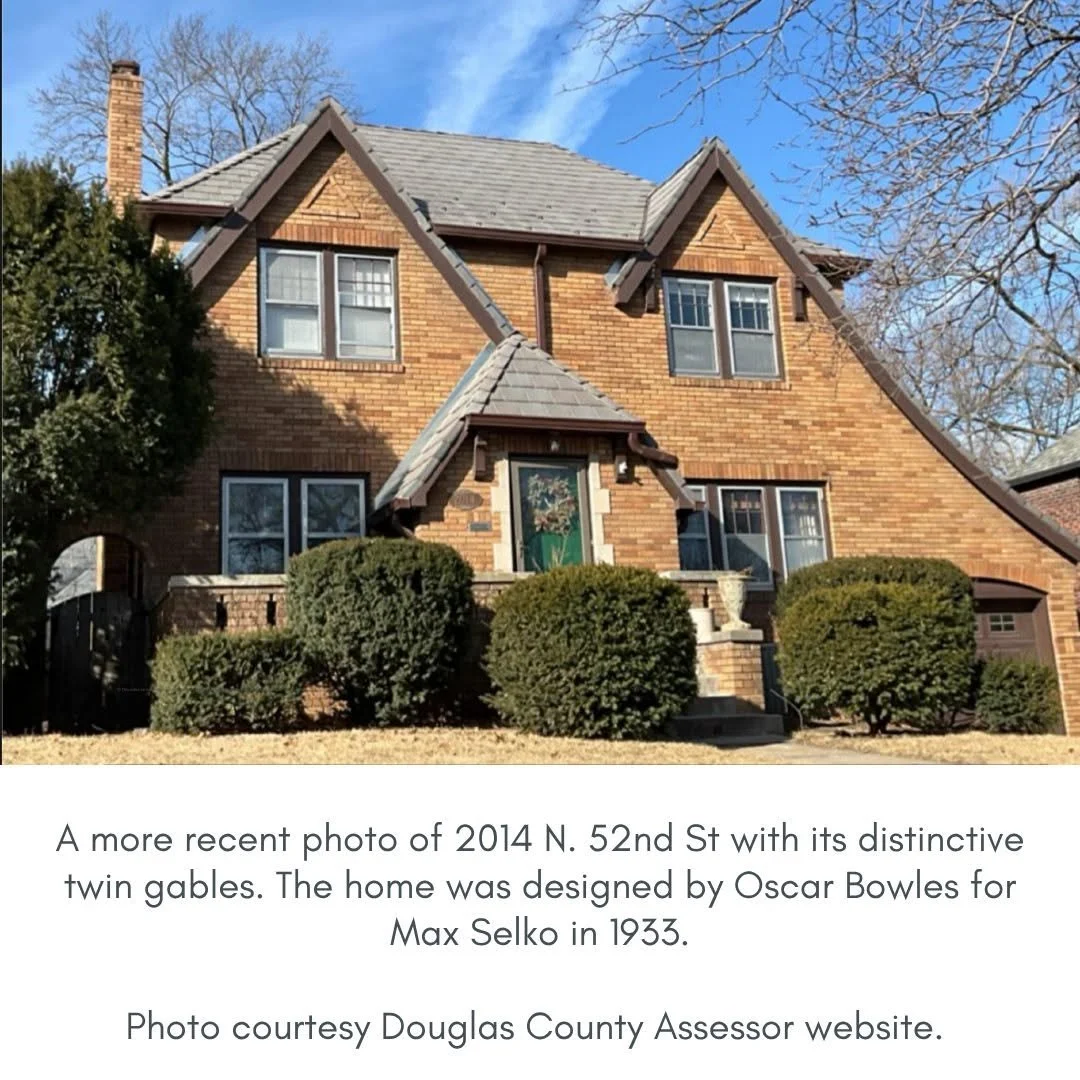
2014 N. 52nd St. built for Max Selko, 1933
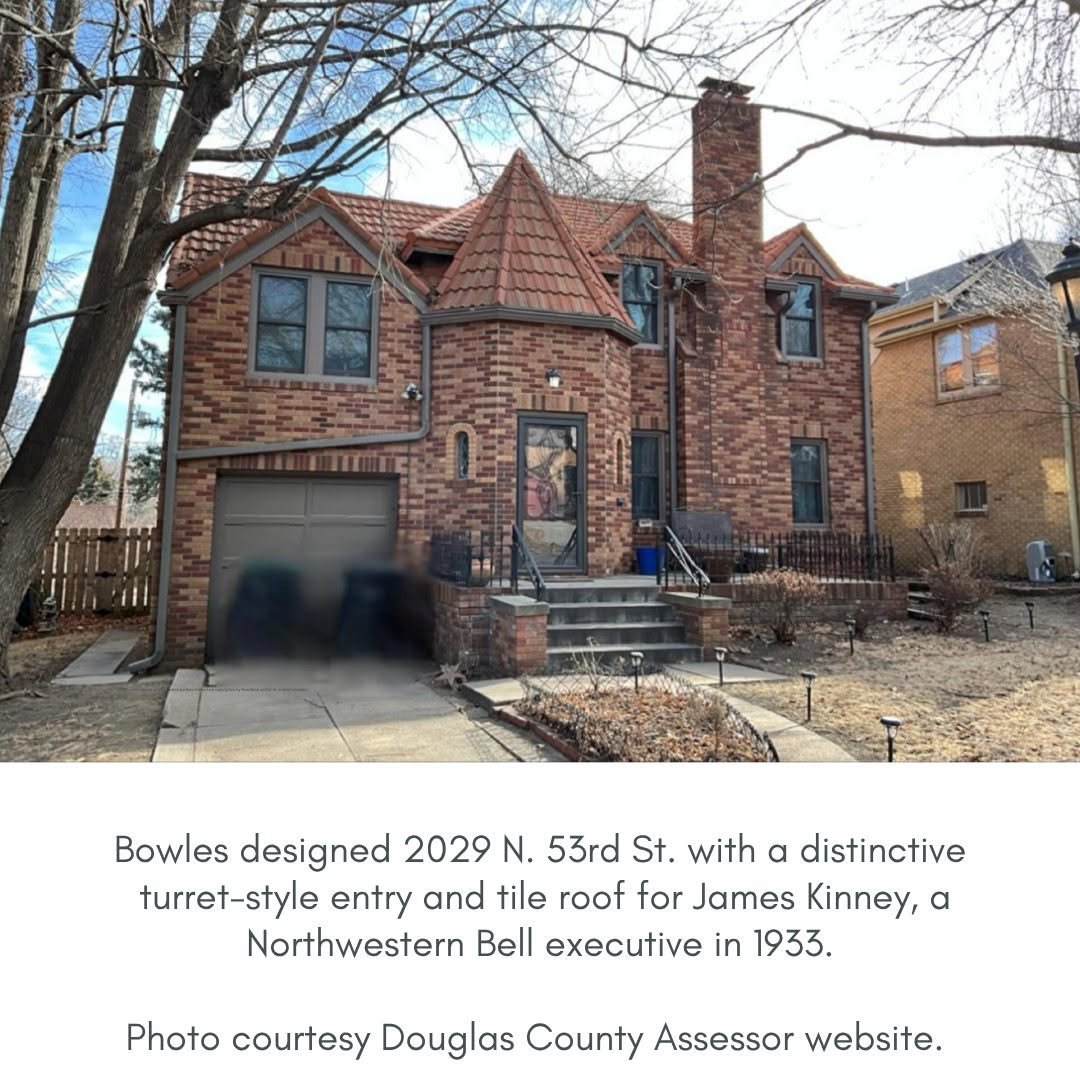
2029 N. 53rd St. built for James Kinney, 1933
2011 N. 53rd St. built for Robert P. Moore, 1934
2508 N. 52nd St. built for Henry E. Voss, 1934
2537 N. 53rd St. built for Norse Olander, 1935
2004 N. 52nd St. built for Harold A. Amsberger, 1936
2008 N. 52nd St. built for Dale McKinnon, 1936
5315 Grant St. built for Fred E. Lippold, 1937
2211 Country Club Ave. built for James W. Kostoryz, 1938
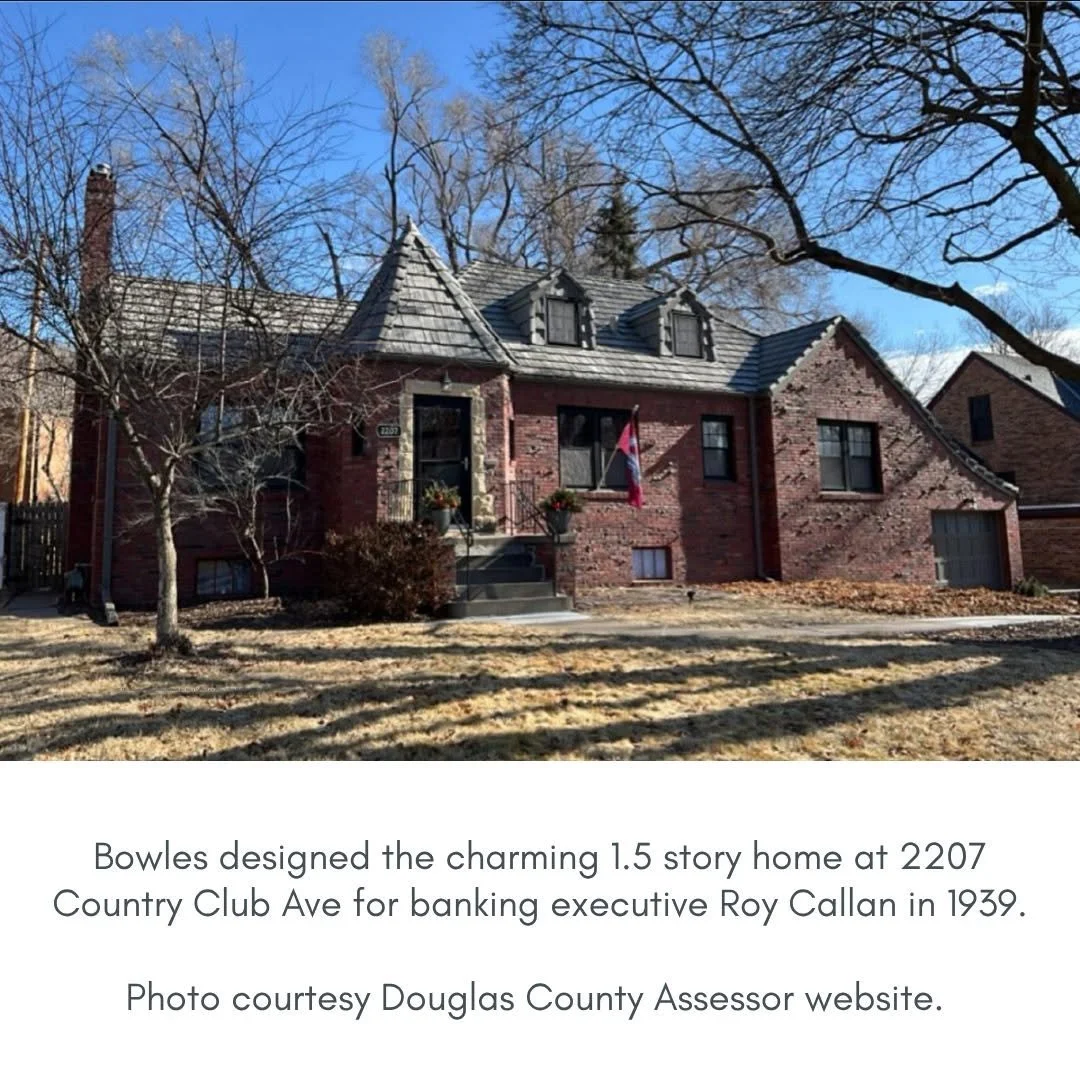
2207 Country Club Ave. built for Roy W. Callan,1939
2205 Country Club Ave. built for Lloyd E. Sherman, 1939
5061 Blondo St. built for Archie Kavich, 1947
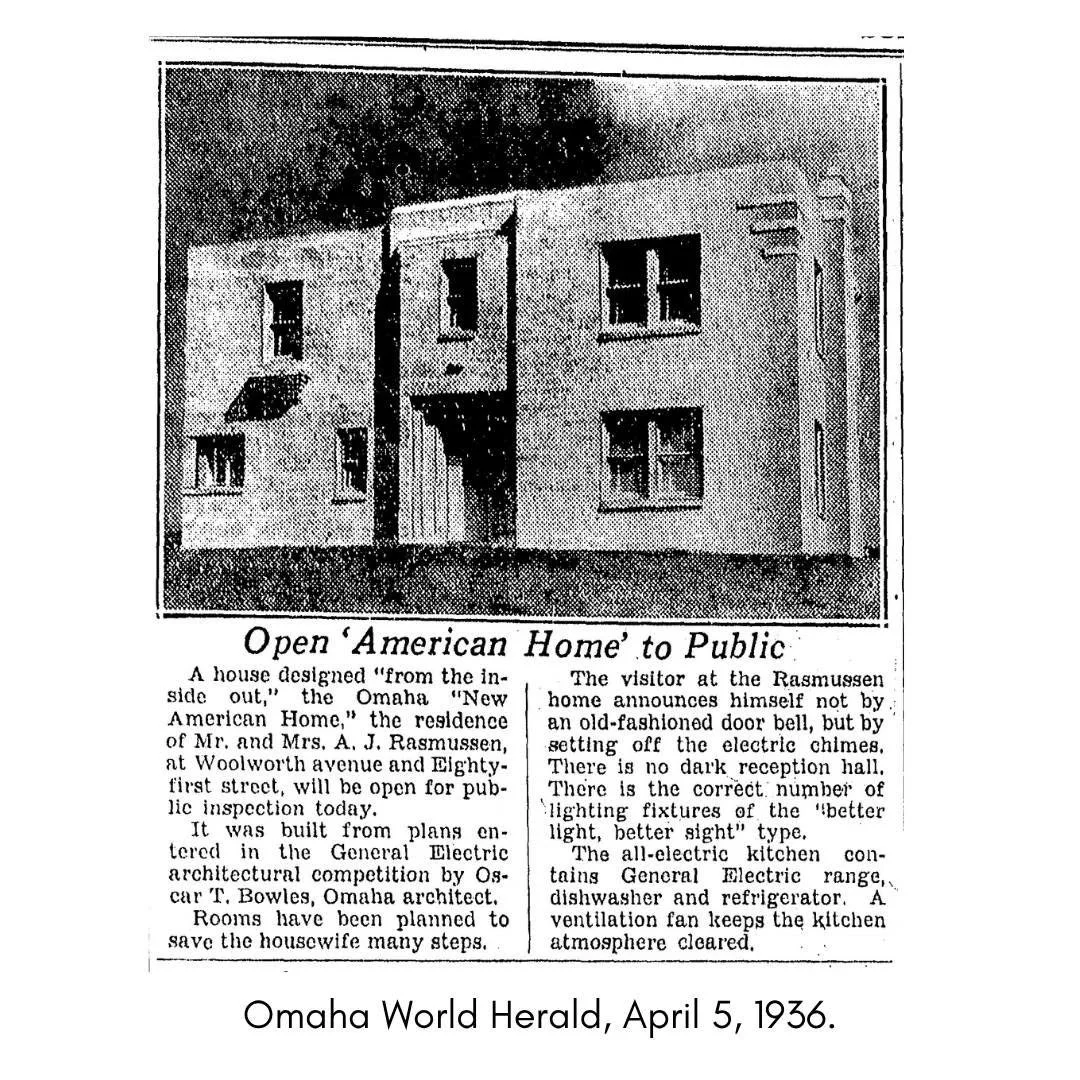
By the mid 1930s, Bowles’ work in Country Club and adjacent neighborhoods gained recognition. General Electric selected a Bowles’ to represent Omaha in its nationwide competition to showcase the latest in home building. His “New American Home” in the Loveland neighborhood was front-page news in the Omaha World-Herald, promising to “save housewives many steps” with unmatched comfort and conveniences. Thousands of visitors toured the home packed with electronic conveniences including the chime doorbell.
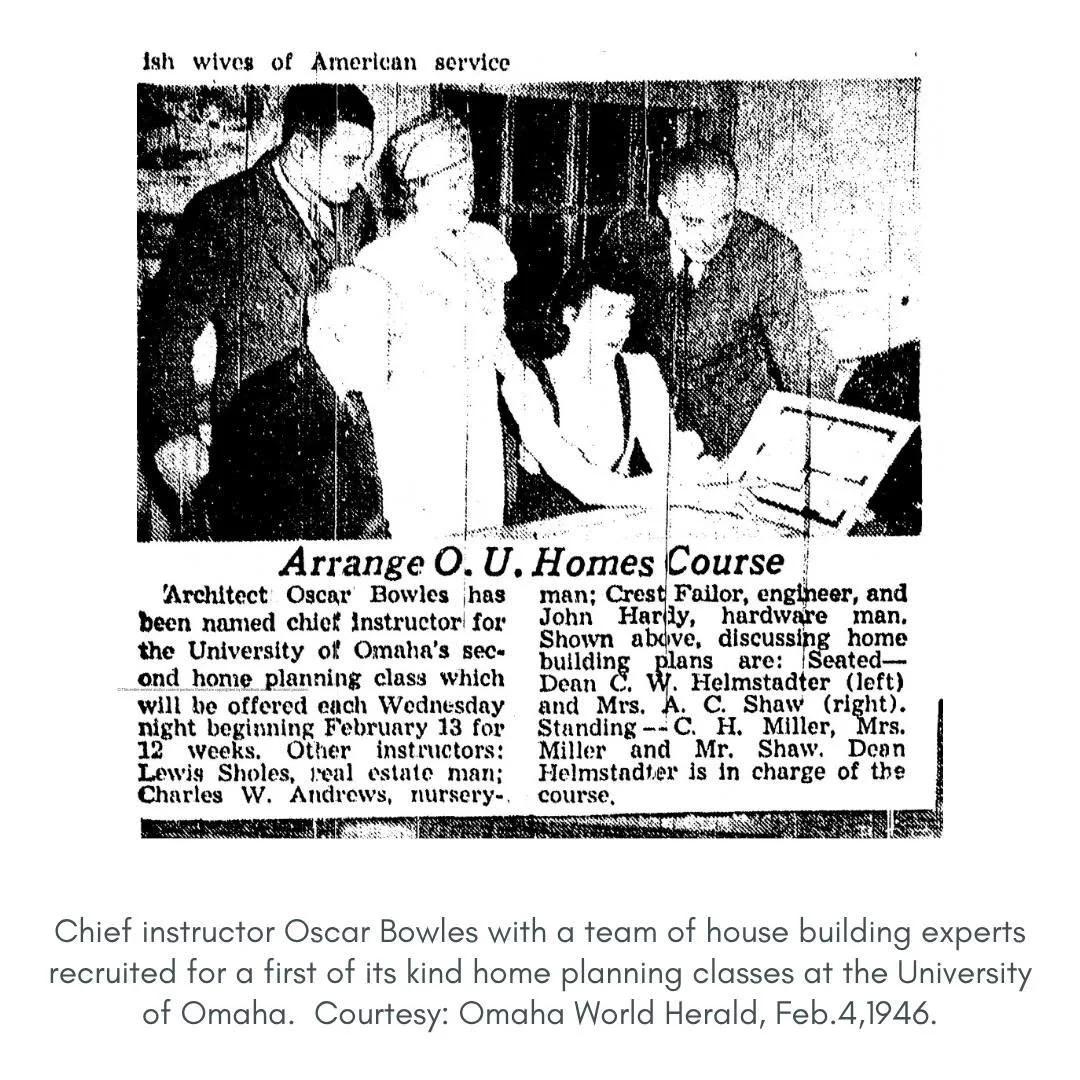
By the 1940s, Bowles took on a new role—chief instructor at the University of Omaha. Fueled by his passion to make home building more accessible, Bowles launched the first of its kind home planning course. The 12-week series enrolled husbands and wives together to plan their dream homes.
With a steady stream of custom homes citywide and commercial projects including Farmers Union Insurance Co. building and the Calandra Camera Company retail store downtown, business boomed for OT Bowles and Associates. Bowles and his wife Josephine somehow found the time for their own dream. They moved into a sprawling midcentury home with adjacent offices at 6720 Dodge St. in 1949.
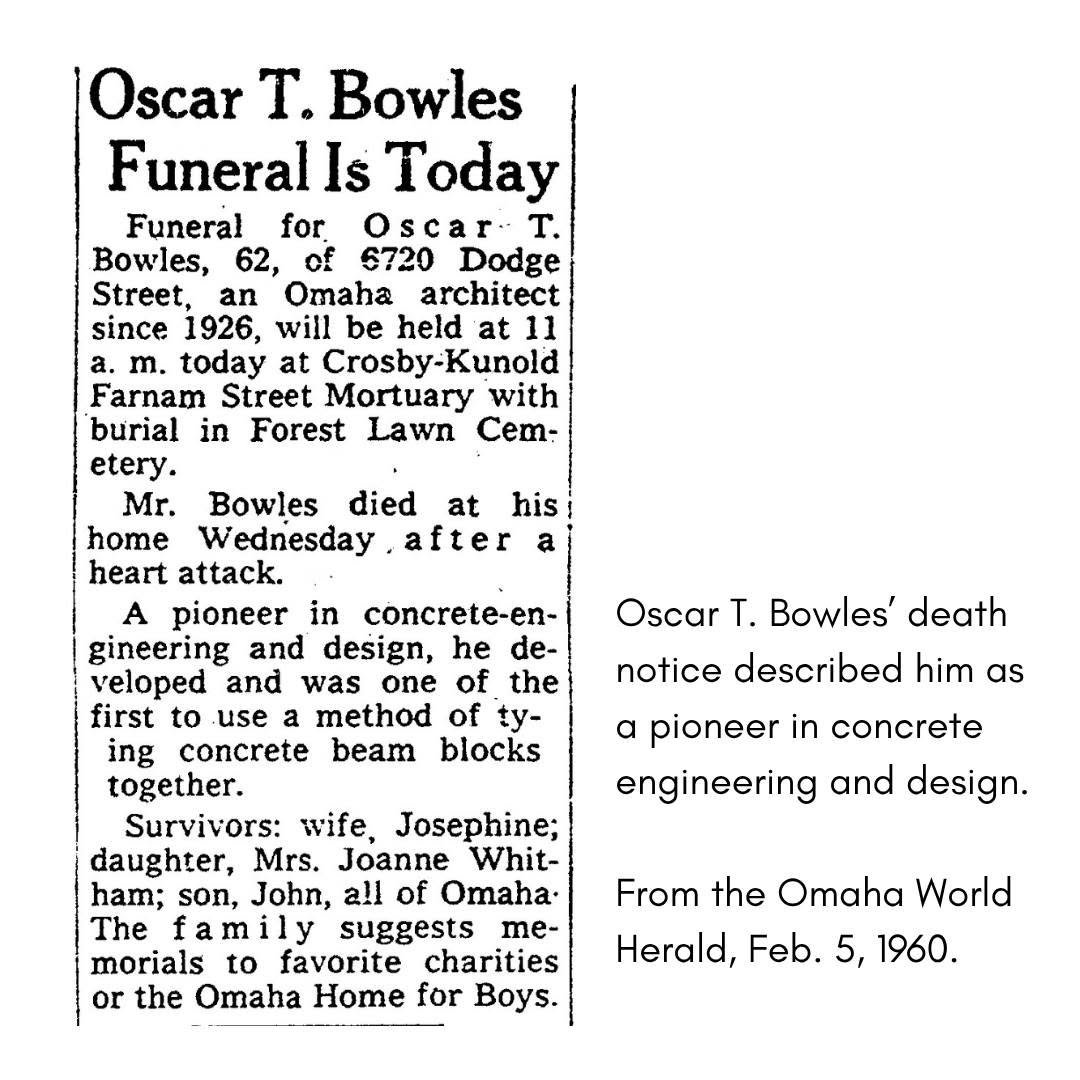
Bowles' flourishing career was cut suddenly short. According to an Omaha World Herald obituary, Oscar Bowles died of a heart attack when he was only 62 years old. Today, you will find examples of his work all over Omaha. Here in historic Country Club, his homes still contribute to the timeless character and grace that define the neighborhood.