
STORY #7: Why Omaha Country Club Moved North
Annexation, Rising Taxes & A Club No Longer “In the Country”
When Omaha annexed Benson in 1917, the Omaha Country Club suddenly found itself inside city limits — and facing a sharp increase in property taxes, reportedly four times higher than before. When the Omaha Country Club was located near Benson in 1900, the village housed 510 people. In 1917, when Omaha annexed the town, it contained well over 5,000 residents. What had once been a quiet countryside retreat was now surrounded by rapid growth.
By 1922, Club President Glenn Wharton acknowledged what many members were feeling: “Our present acreage is too valuable for further holding as a golf and country club.”
Nearby streets were being paved, neighborhoods were expanding and what had once been open fields now felt increasingly crowded. Discussions began about selling the land, first with hopes that the City of Omaha might purchase it as a public golf course.
Meanwhile, Club leaders were already scouting a new site. In 1923, they selected the Arthur Brandeis farm, known as Olive Crest, between 60th and 72nd Streets — a wooded landscape so lush that OCC member John Redick joked it had “more trees than Heinz has pickles.”
This decision marked a turning point: from secluded country fairways…to what would soon become one of Omaha’s most distinctive residential districts.
What's your favorite thing about living in Country Club?
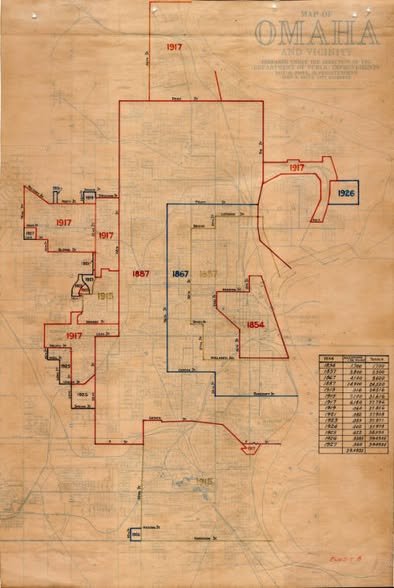
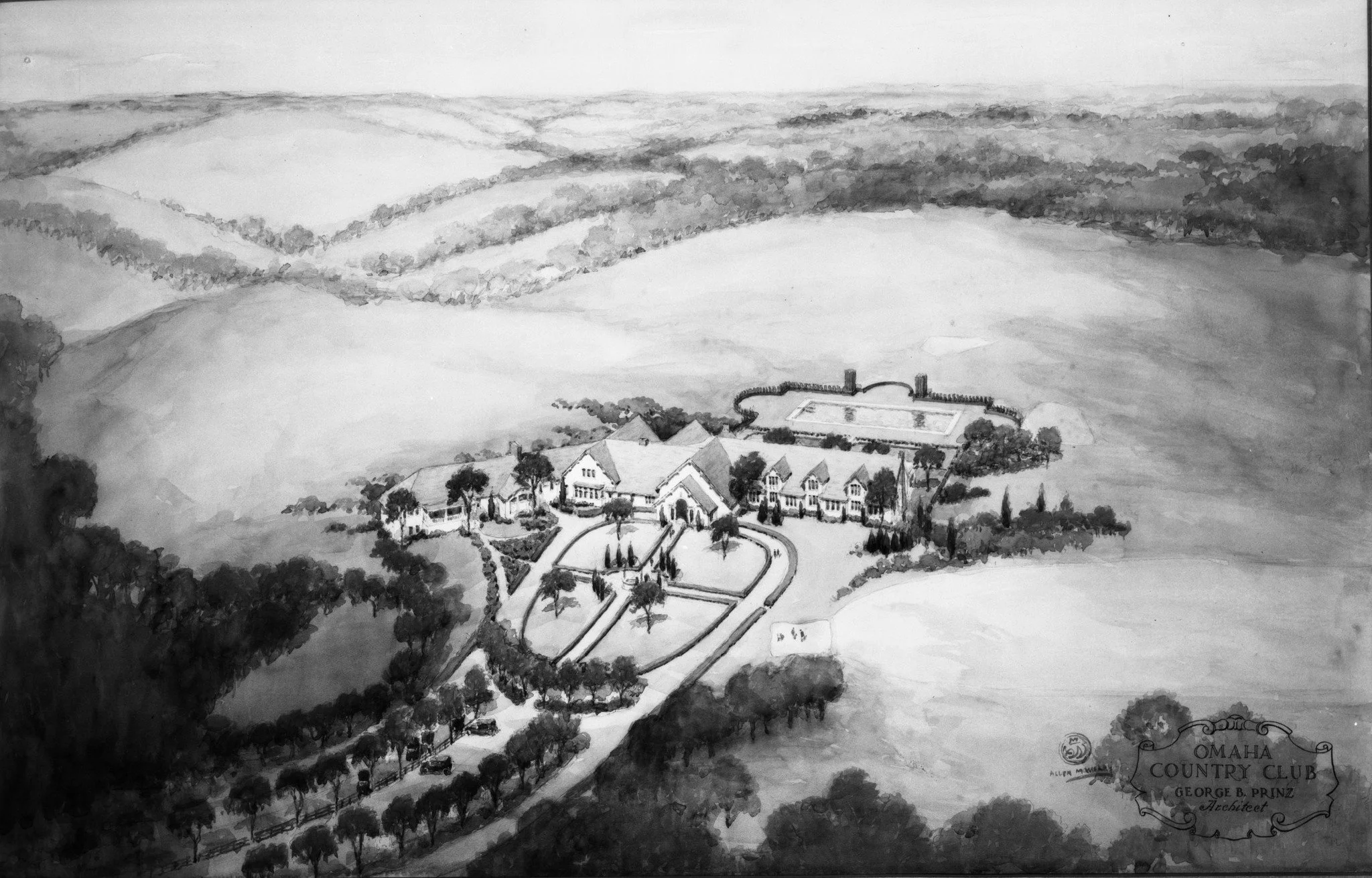
Photo Captions:
Fascinating annexation map dating from 1854-1926 from the Omaha Public Library Archives. 100 years later, annexation is still a topic for the City of Omaha!
This rendering depicts George Prinz plans for the new OCC Clubhouse. From The Durham Museum Archives BF51-118
