
Blog
In 2026, we’re celebrating 100 years of the Country Club Neighborhood - one of Omaha’s most distinctive residential areas, known for its winding streets, mature trees and remarkable homes. Throughout the year, this blog will be home to 100 stories from our neighborhood — celebrating the people, places, architecture, and memories that shaped it into the community we call home. Follow along as we explore how a golf course became a neighborhood, and how history still lives on our streets.
Have a story or photo to share? We’d love to hear from you: council@countryclubhd.org
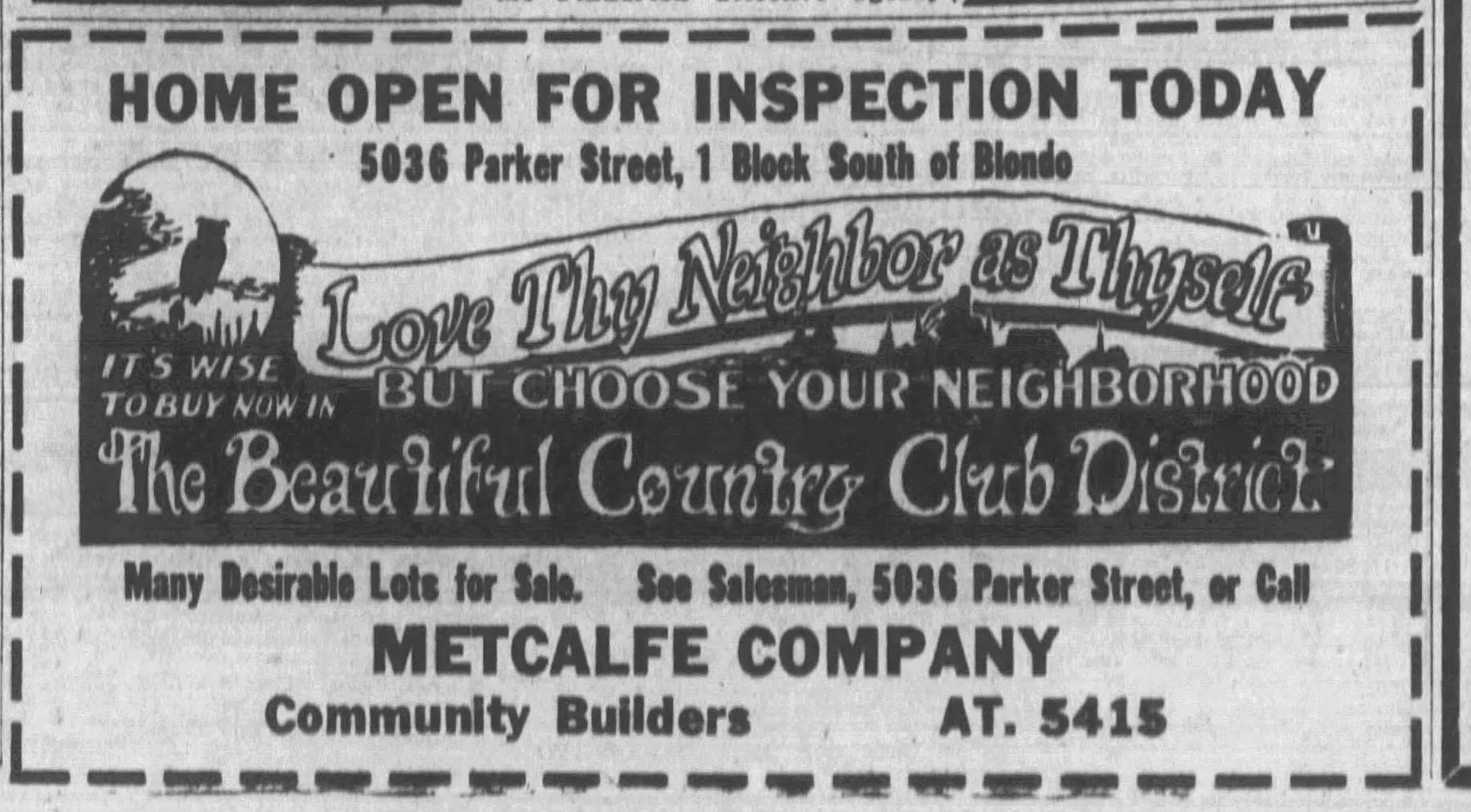
STORY #32: 5036 Parker Street (Built 1928)
A building permit for the home at 5036 Parker Street was issued in October 1927 for $6,000, and construction was completed in February 1928. Built as a speculative home by the Metcalfe Company, it stands out as the only Colonial-style house on the block.
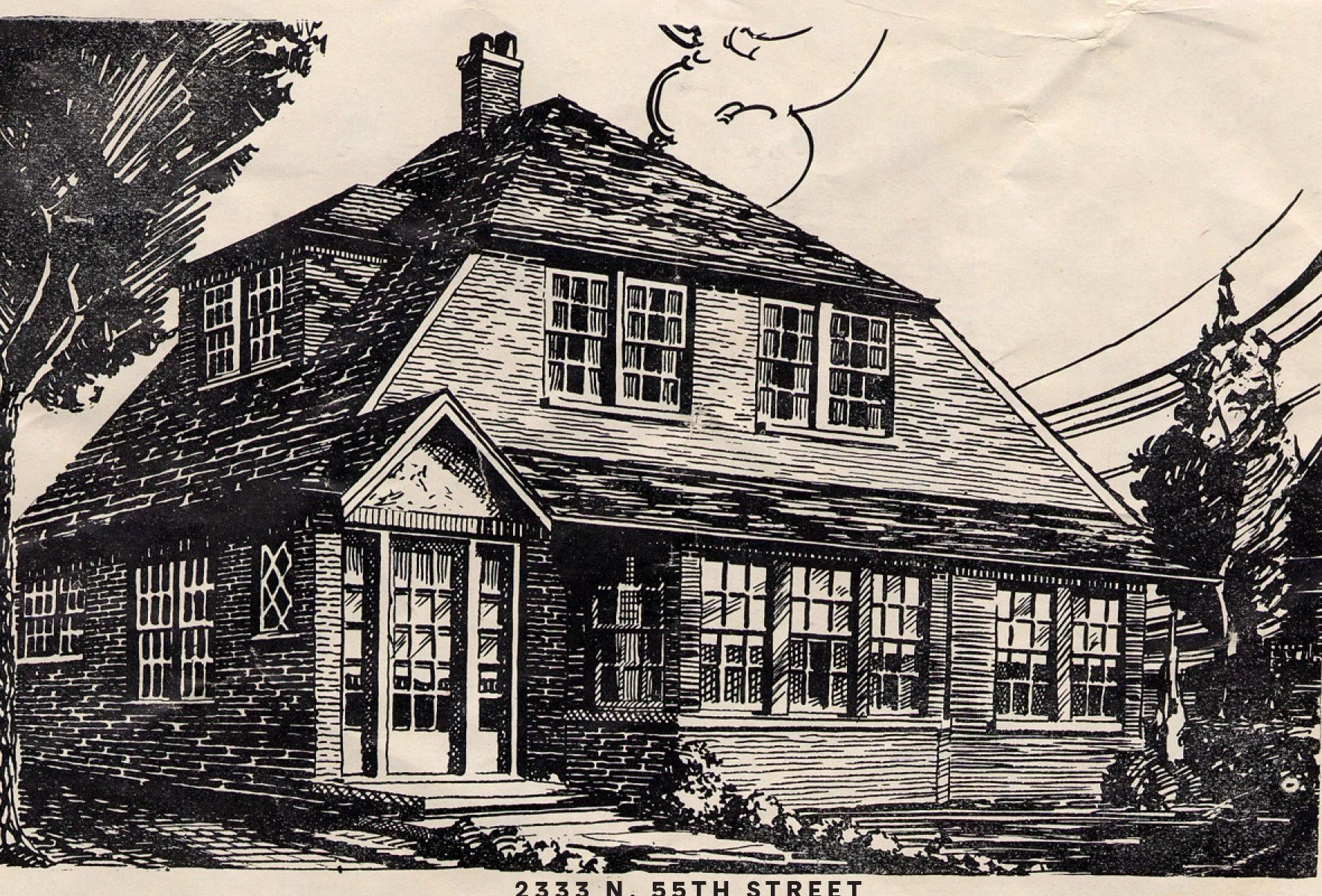
STORY #31: First Homes of the Country Club Neighborhood
When the Country Club District opened in the mid-1920s, developer Theodore Metcalfe had a clear vision for the neighborhood. He wanted homes that were distinctive — not rows of identical houses, but a variety of architectural styles built by many of Omaha’s best craftsmen.
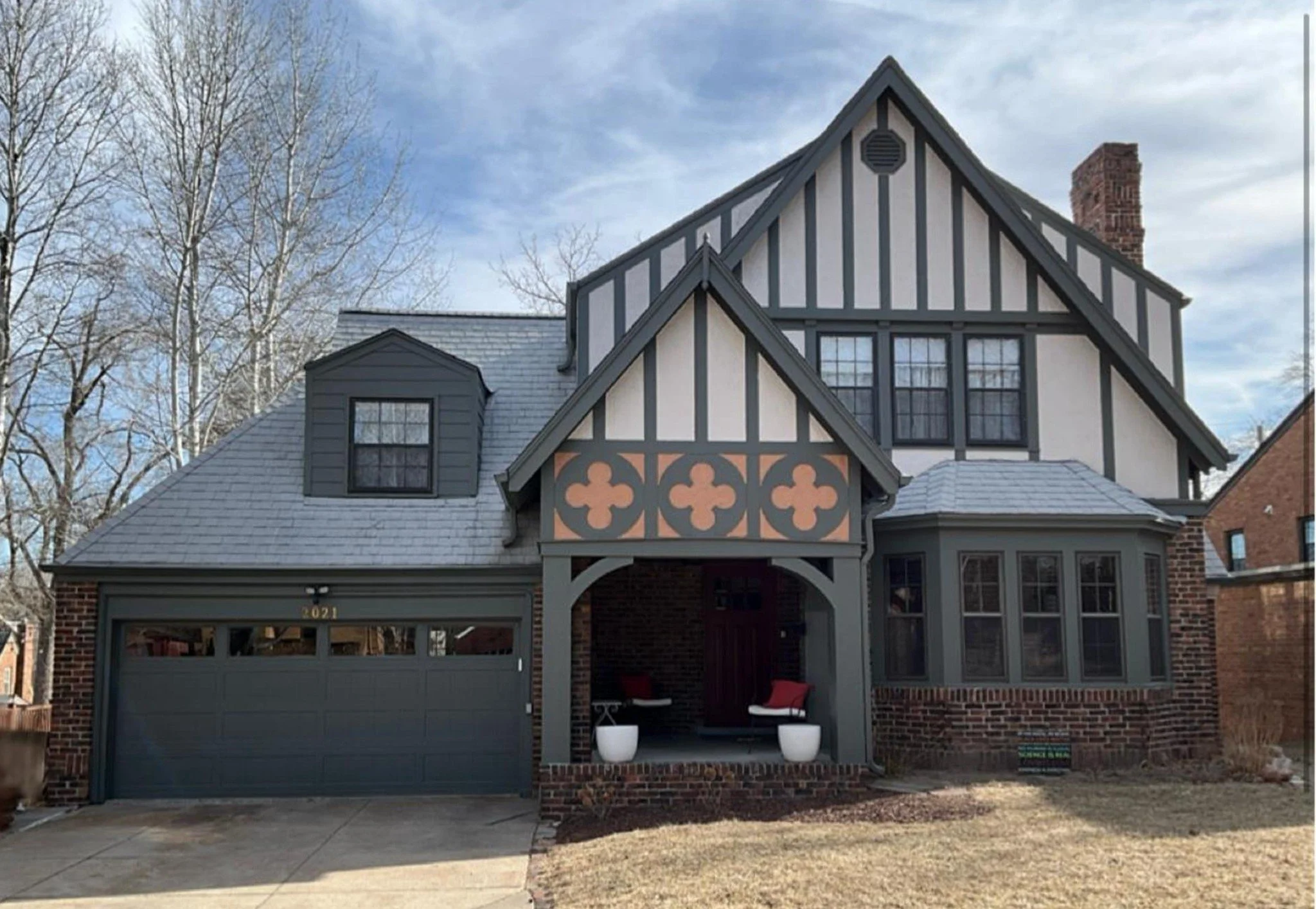
STORY #30: Five Architectural Details to Look for in Country Club Homes
One of the reasons the Country Club Historic District feels so special is the incredible attention to architectural detail built into its homes nearly 100 years ago.
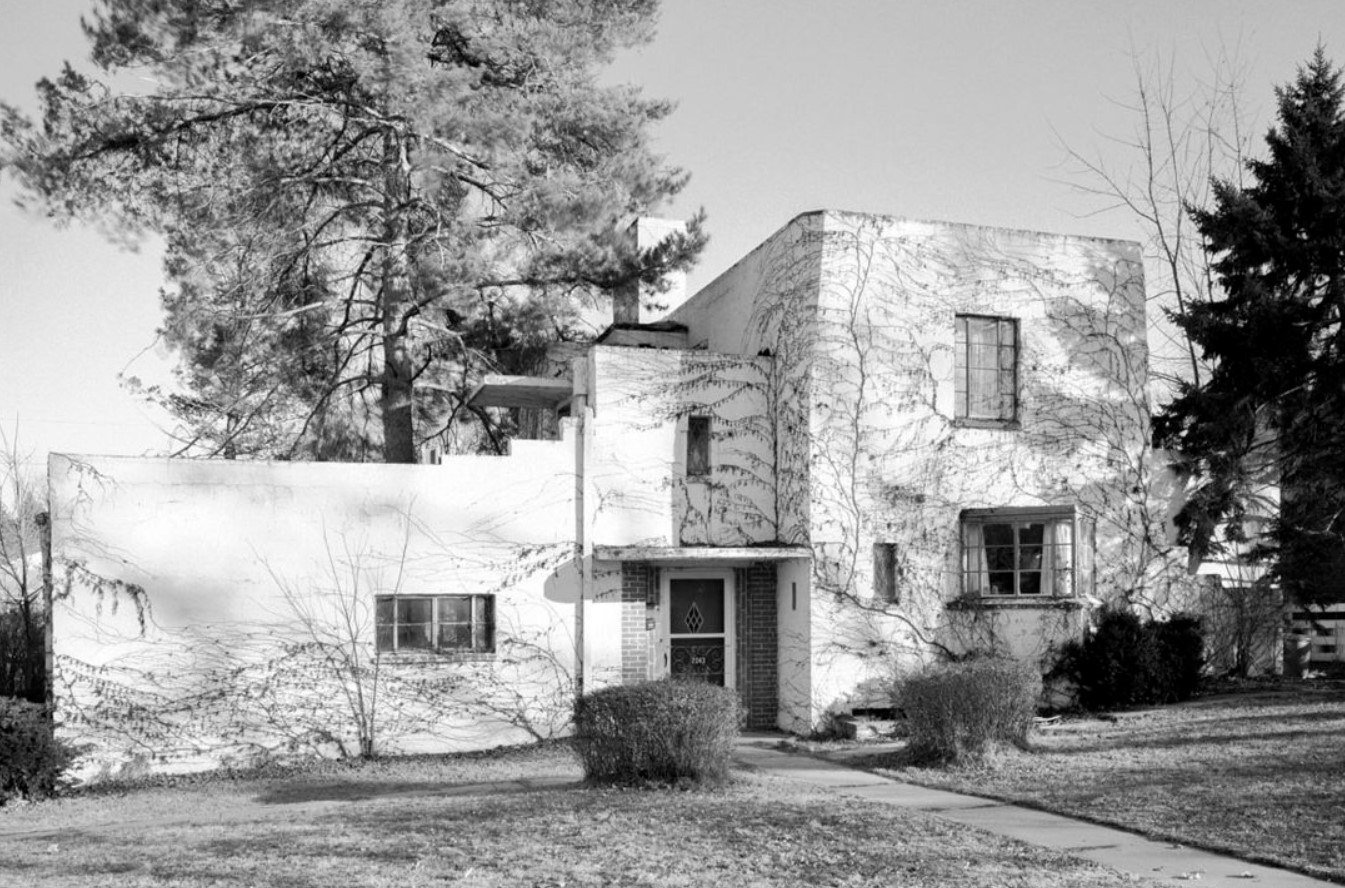
STORY #29: The “House of Tomorrow”
One of the most fascinating homes in the Country Club Historic District is also the most unexpected. While most houses in the neighborhood follow traditional Tudor or Colonial revival styles, one home looked boldly toward the future.
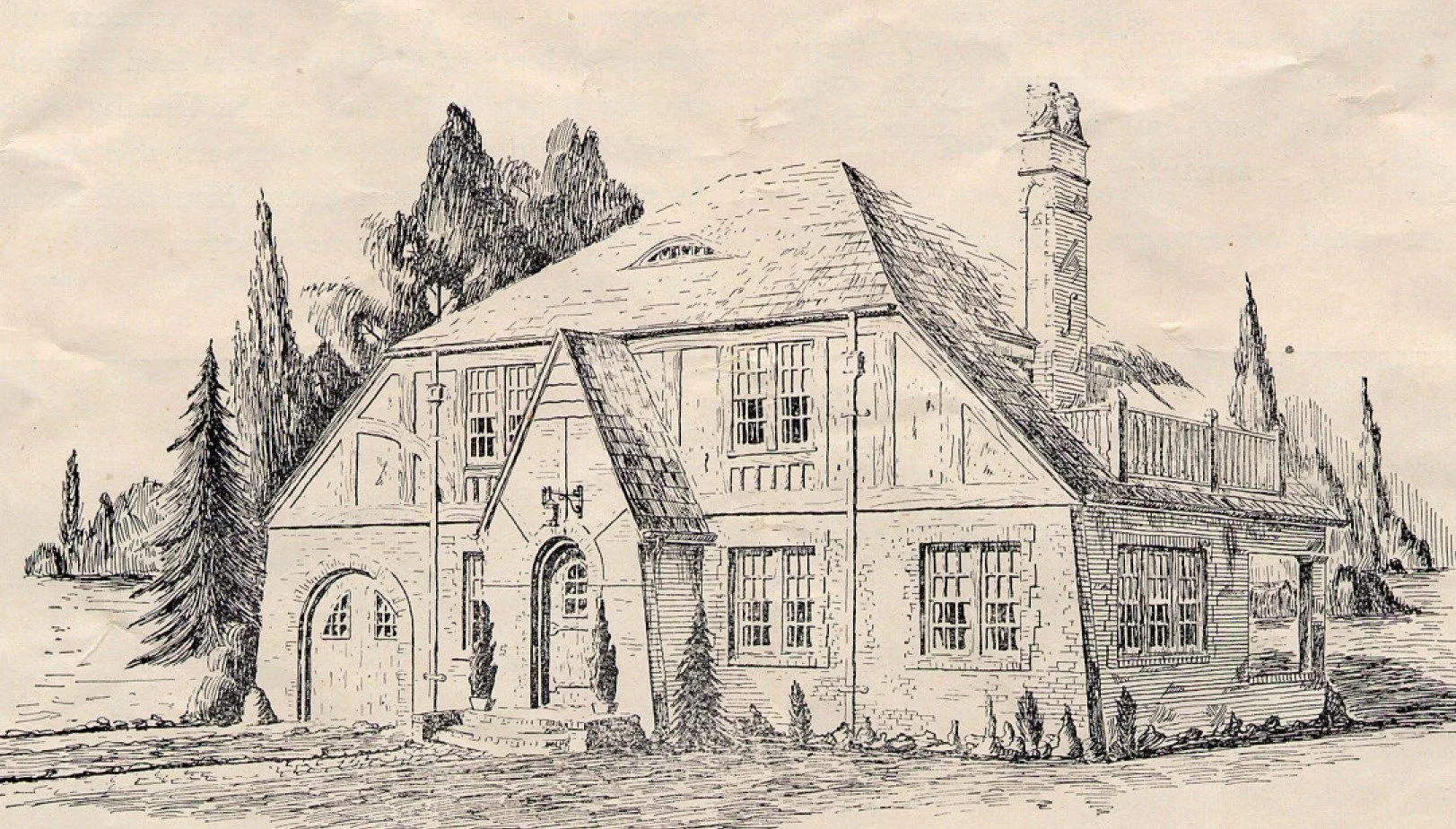
STORY # 28: The Voysey Influence
Among the many Tudor-inspired homes in Country Club is a smaller group of houses whose shapes recall the work of English architect C.F.A. Voysey, a leading figure in the Arts and Crafts movement.
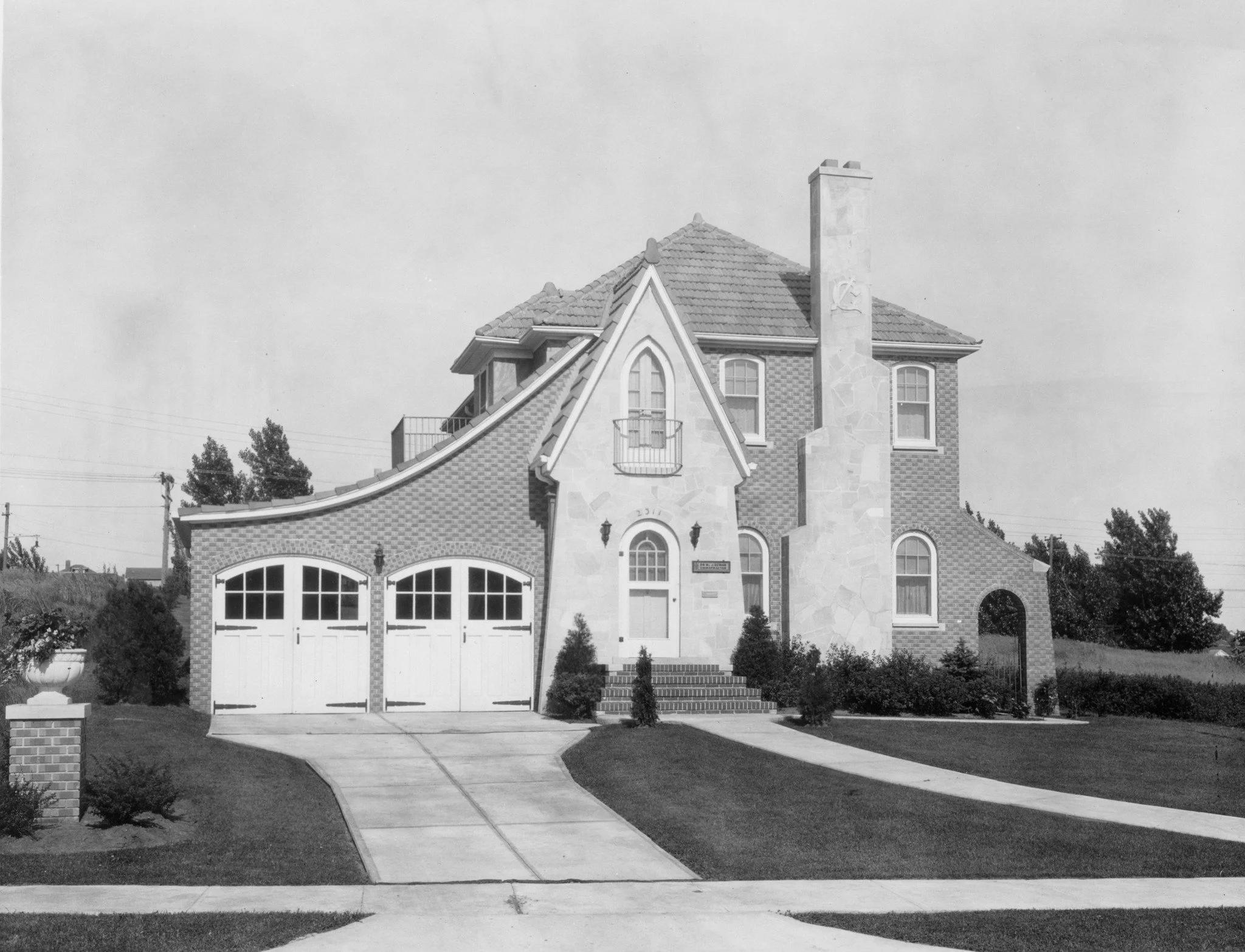
STORY #27: French and Medieval Influences
While many homes in the Country Club Historic District draw inspiration from English Tudor architecture, a few reflect a slightly different influence — French medieval design.
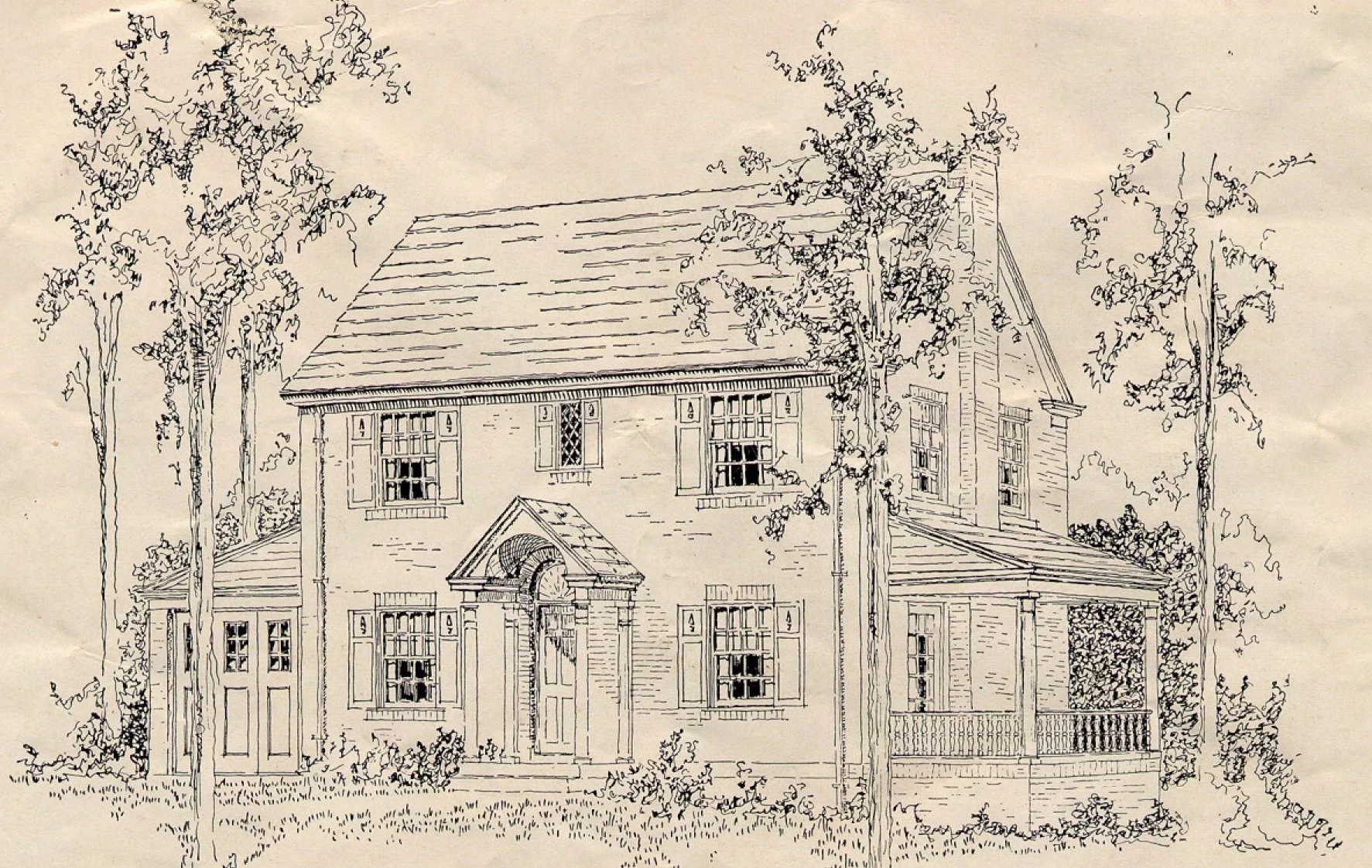
STORY #26: Colonial Revival Elegance
While Tudor homes dominate the Country Club Historic District, another popular architectural style of the 1920s and 1930s also made its mark: Colonial Revival.
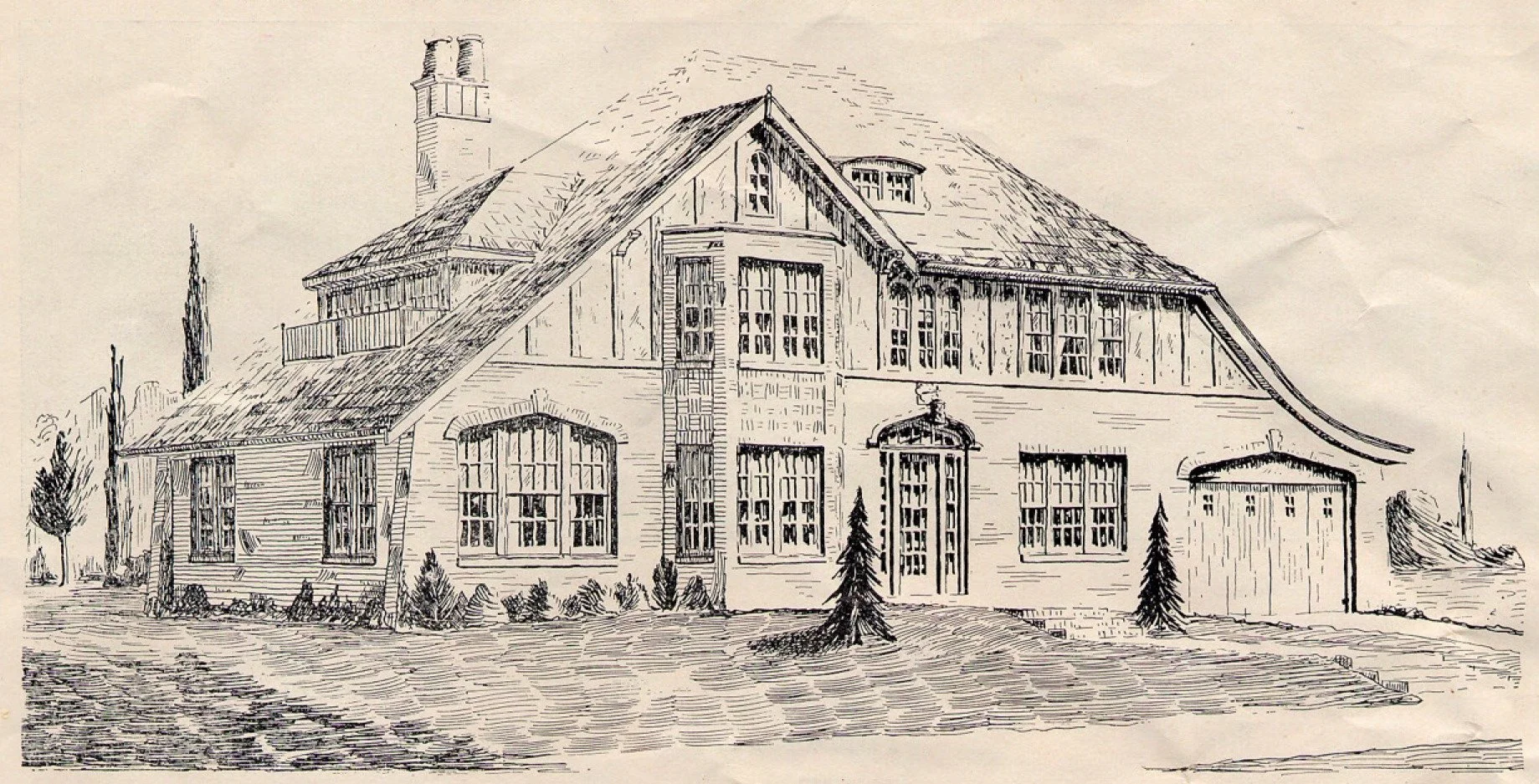
STORY #25: Tudor Style: The Signature Look of Country Club
If there is one architectural style that defines the Country Club Historic District, it is Tudor Revival. Walk down almost any street in the neighborhood and you will see its influence.
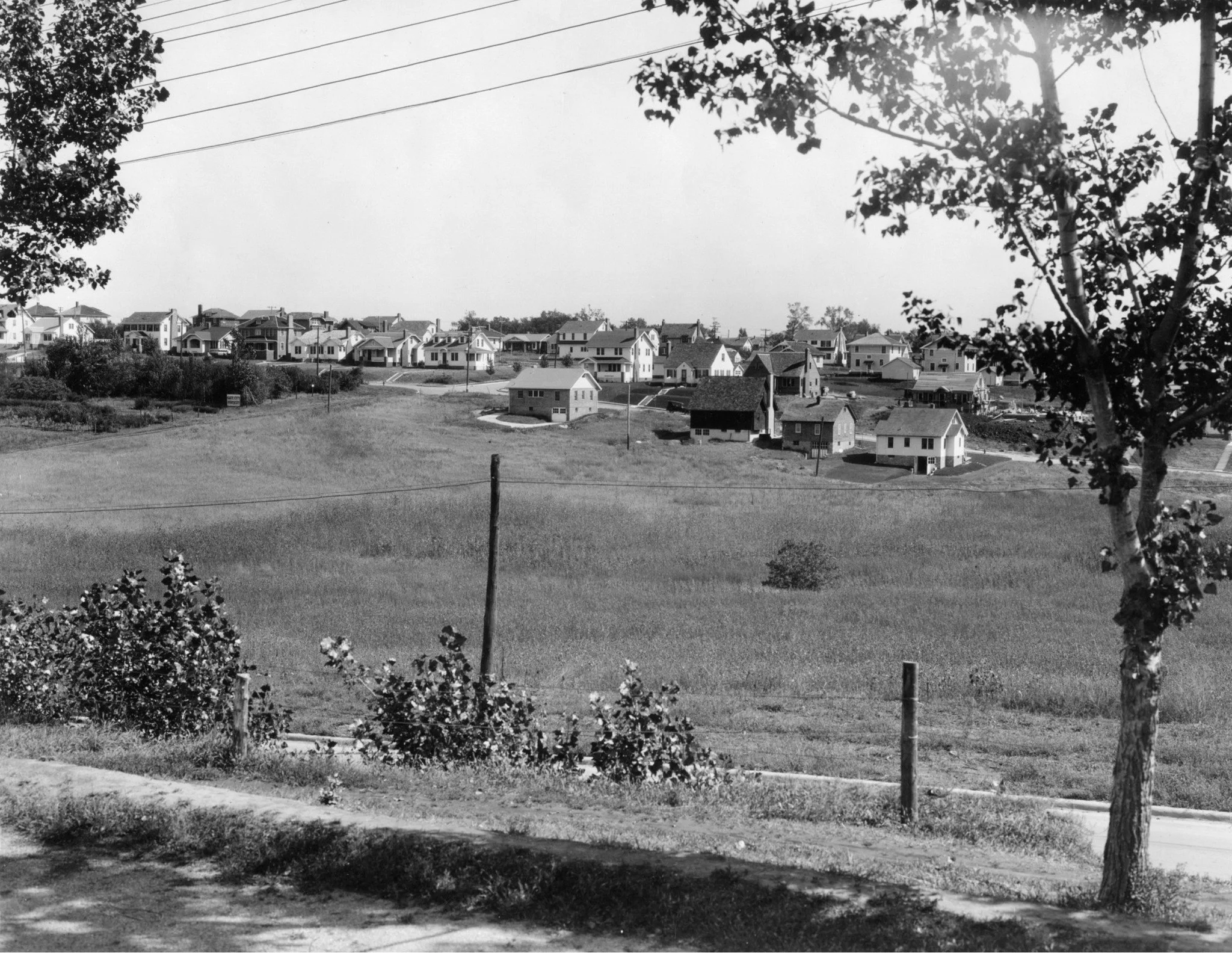
STORY #24: Hansen’s Addition at 52nd & Blondo
This 1927 photograph was taken at 52nd and Blondo Streets looking east, across open ground toward a neighborhood that was developing just ahead of the Country Club District.
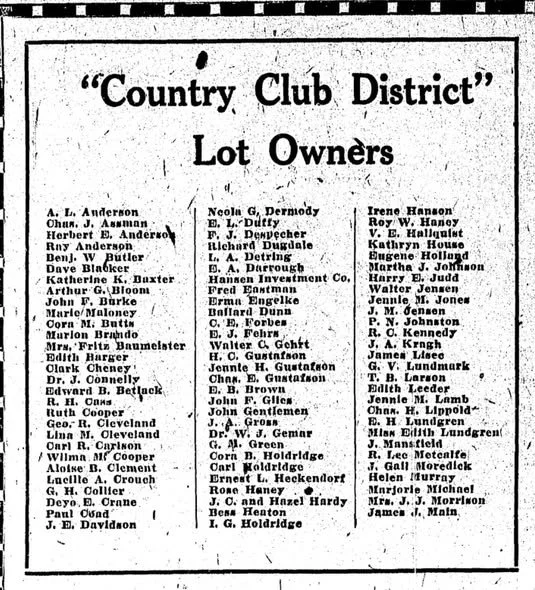
STORY #23: Who Were the First Neighbors? — Country Club, 1927
In September 1927, the Omaha World-Herald published the names of many of the first people who purchased lots in Omaha’s newest and most talked-about neighborhood.
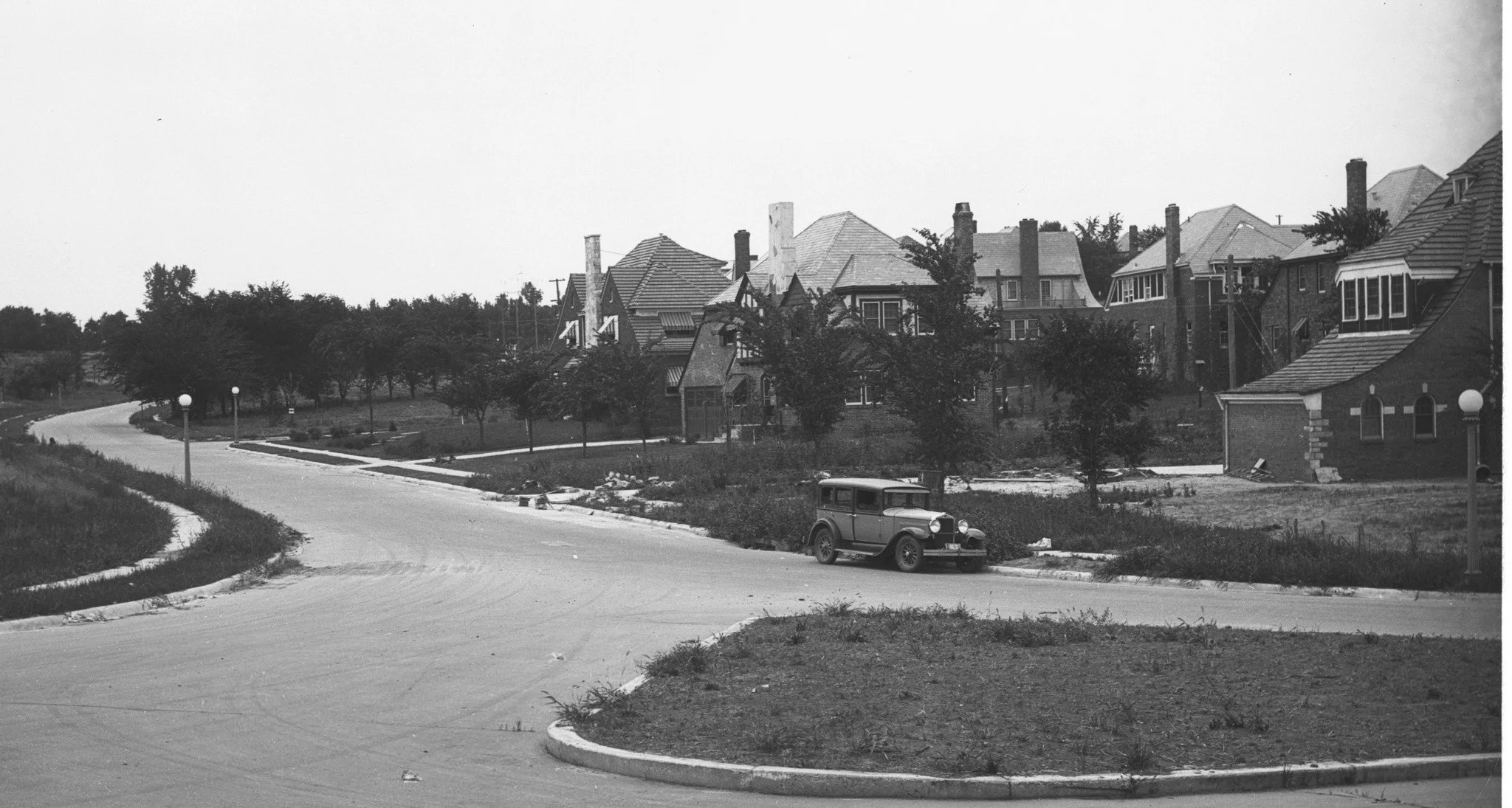
STORY #22: Imagine Living Here in 1927
For more than 20 years, Harry A. Tukey had walked the old golf course fairways. Watching the transformation unfold, he wrote: “Never did I walk down number one without looking south over Dundee and realizing what a magnificent location it would be for a home.”
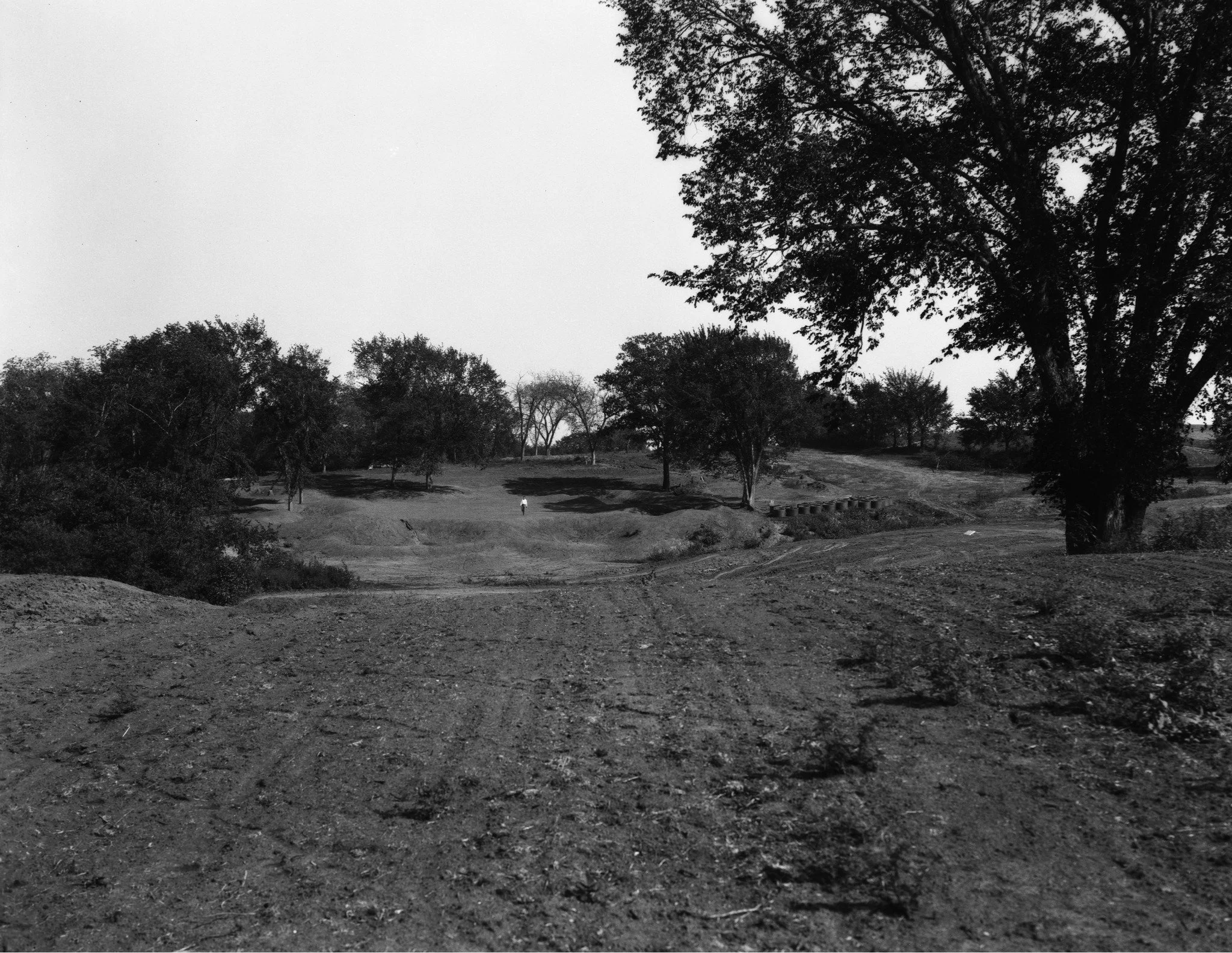
STORY #21: What Were Omaha’s Leaders Saying About Country Club in 1927?
When the Metcalfe Company unveiled the Country Club District in September 1927, Omaha’s civic and business leaders were eager to share their impressions.
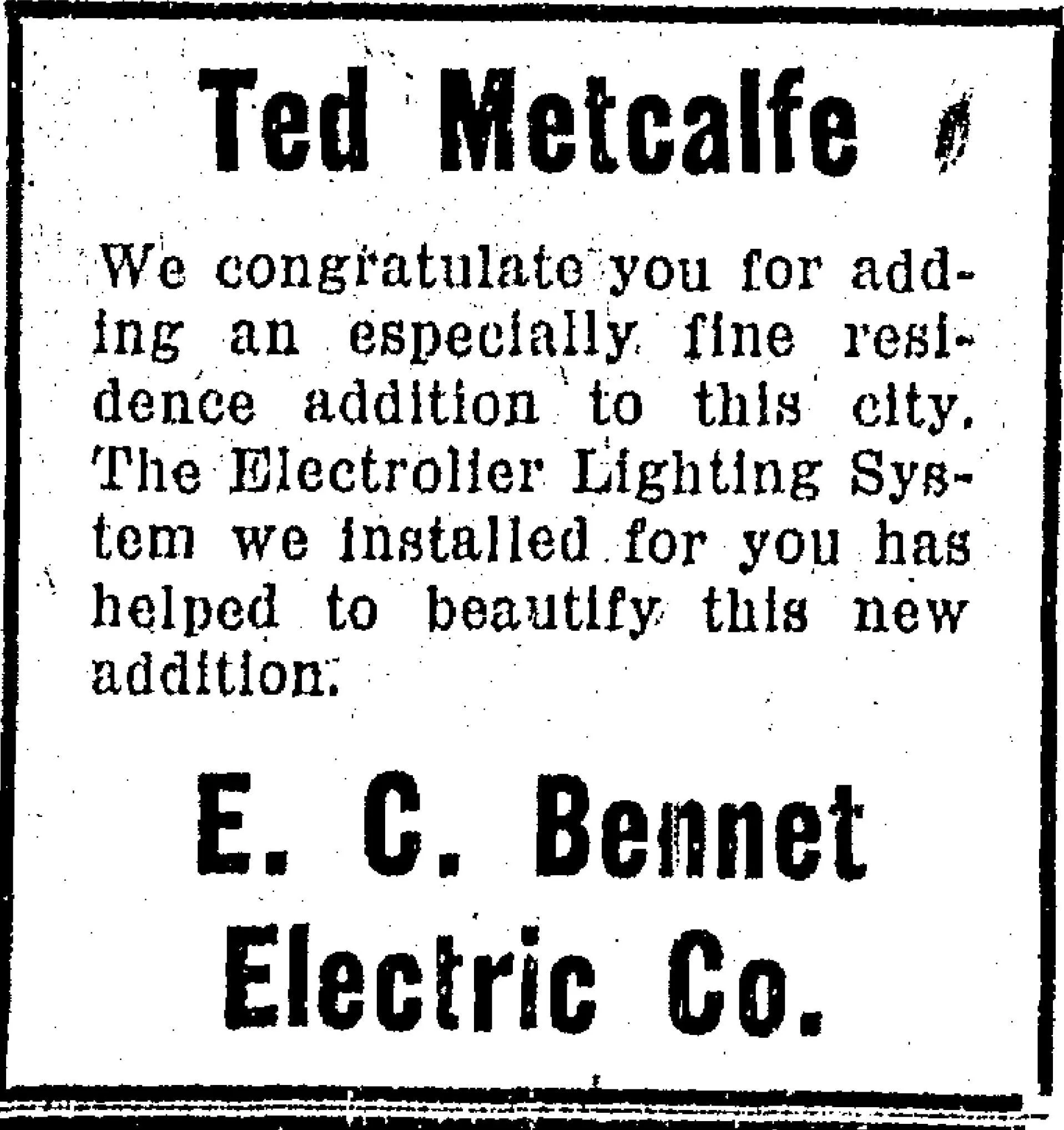
STORY #20 - Lighting the Country Club Neighborhood
On Sept. 10, 1927, the Country Club neighborhood quite literally shined.
That evening, the district’s artistically designed streetlights glowed for the first time — marking the final touch in completing Omaha’s newest premier residential addition. The Omaha World-Herald proudly reported that every street was paved and that water, gas and electricity had been brought to every lot.
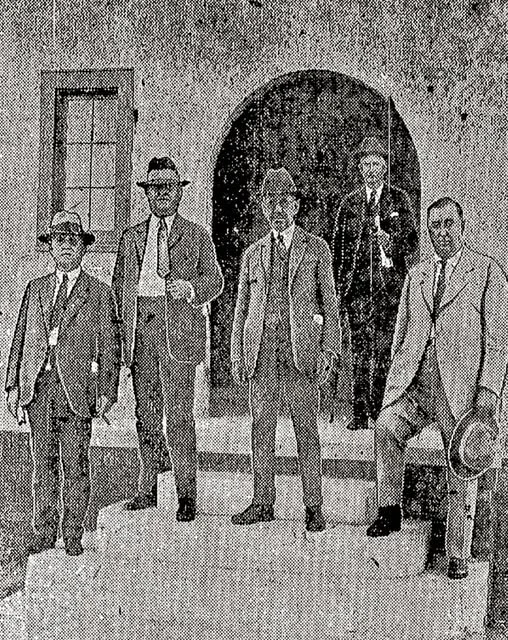
STORY #19: Chicago’s Mayor Tours Country Club in 1927
Before the first families had even settled in, Omaha’s new Country Club District was already attracting national attention.
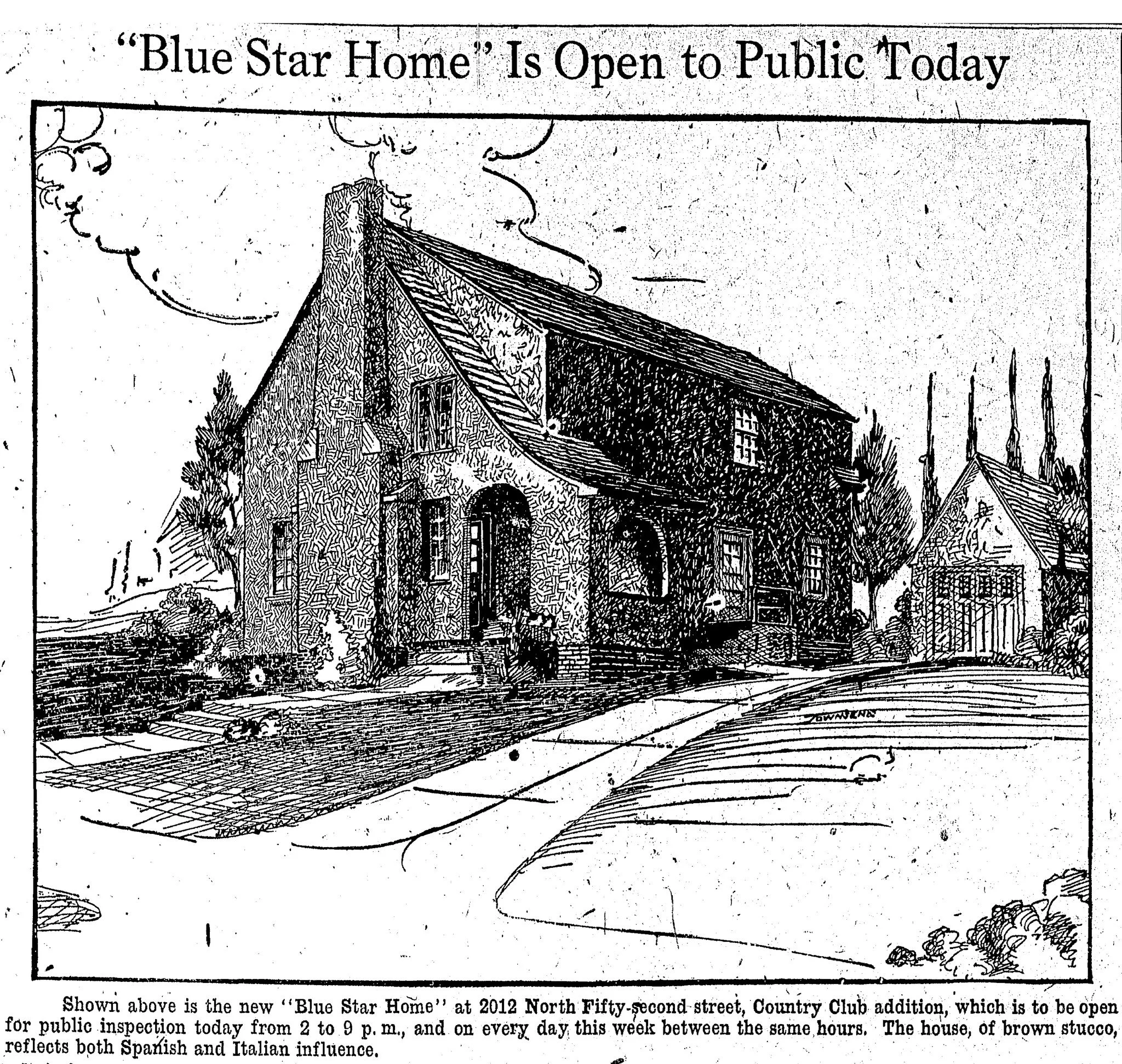
STORY #18: The Blue Star Home
In September 1927, the Country Club neighborhood introduced Omaha to something entirely new — the “Blue Star Home.”
Located at 2012 N. 52nd St., the newly completed residence opened for public inspection as a showcase of modern living.
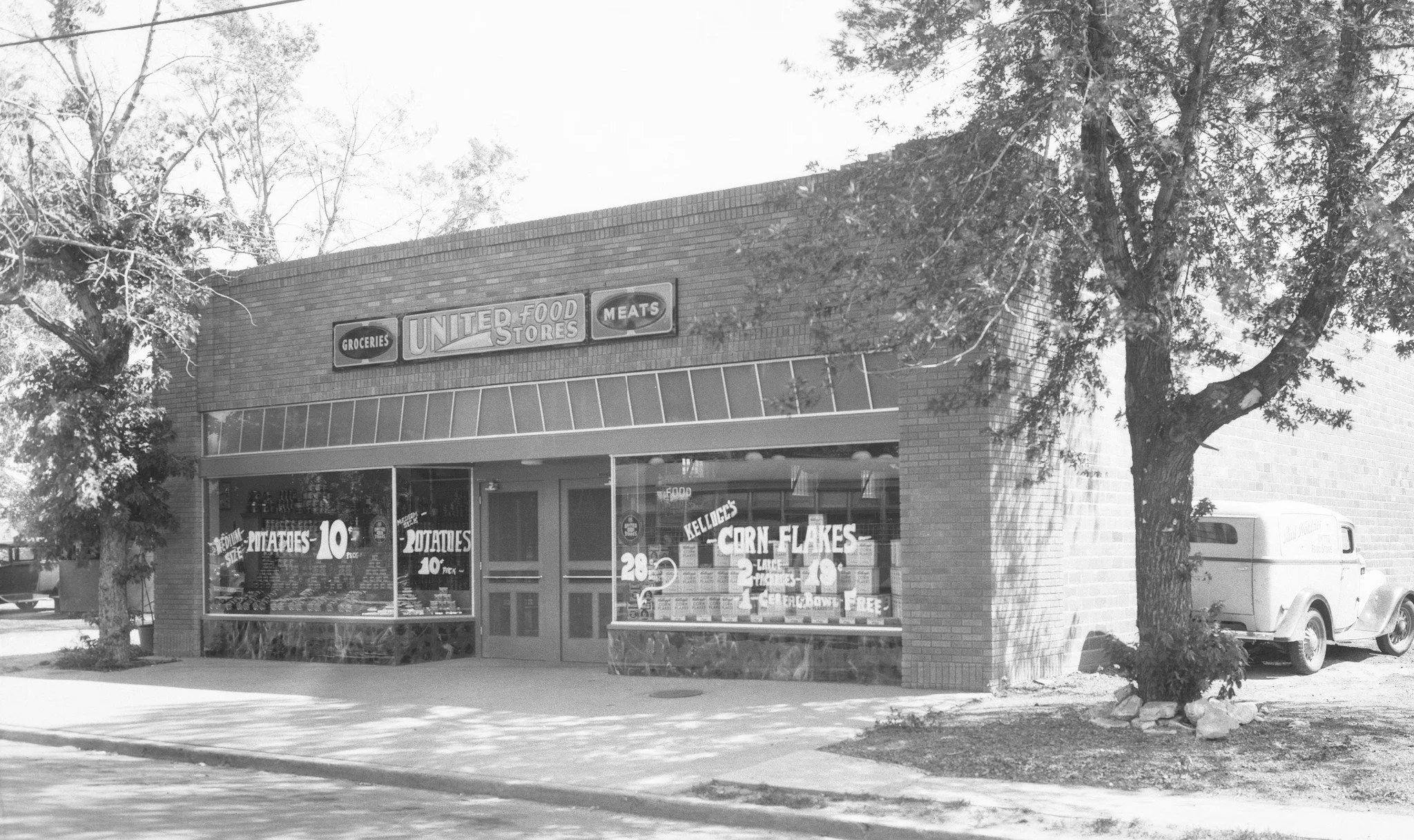
STORY #17: Early Businesses Along Military Avenue | 52nd to 56th Street (South Side)
When the Metcalfe Company began planning the Country Club neighborhood, they imagined something extraordinary along Military Avenue — a Spanish-inspired commercial village known as the Country Club Plaza. Designed to serve as a lively shopping and gathering destination just west of 52nd Street, it would have been Omaha’s answer to Kansas City’s famous Plaza District. But the vision never came to life.
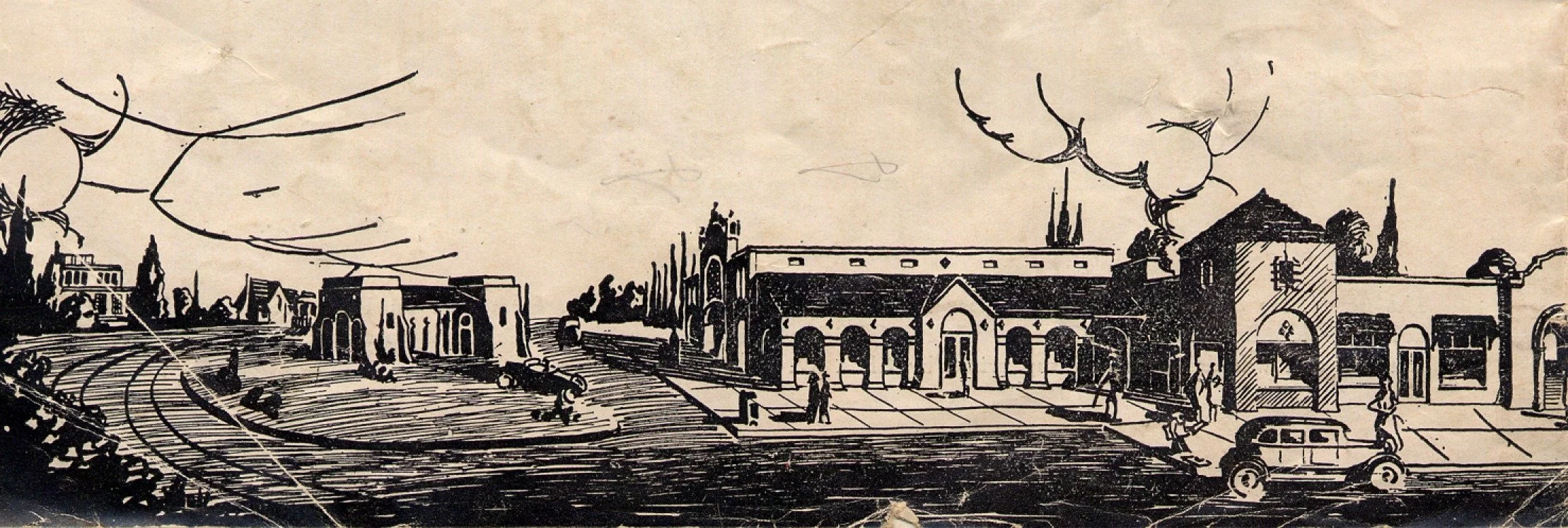
STORY #16: Country Club Plaza: The Vision That Almost Was
“START PLAZA WORK—Grading on $250,000 Project Will Begin Monday,” announced The Omaha Daily News on Aug. 1, 1926.
With that headline, Omaha residents were introduced to an ambitious new plan for the edge of the Country Club District: a Spanish Revival–style commercial center to be called Country Club Plaza—modeled after the celebrated Country Club Plaza in Kansas City.
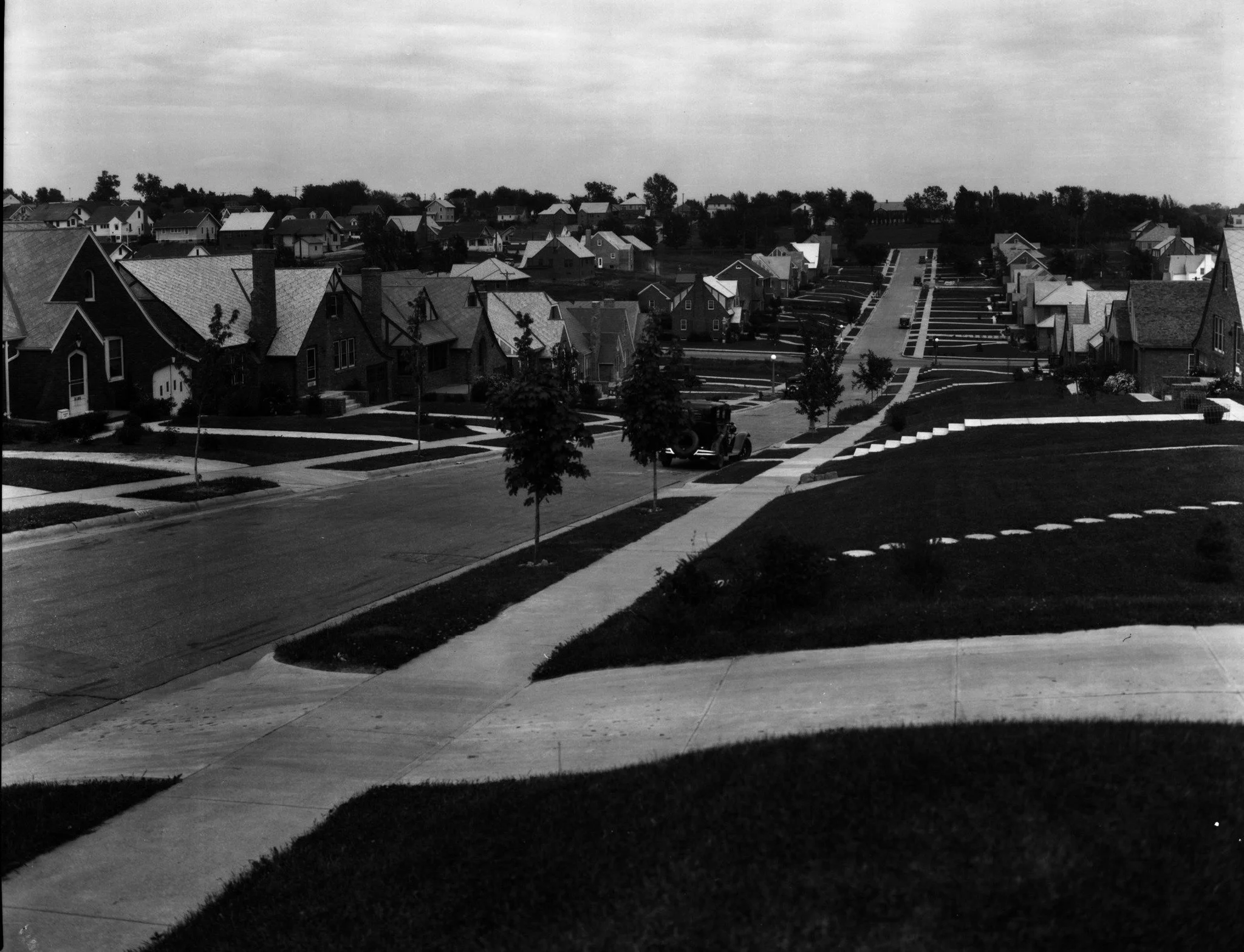
STORY #15: Conditions to Build in the Country Club District
When the Metcalfe Company sold lots in the Country Club District, buyers agreed to a detailed set of building conditions—rules designed to shape the look, feel, and “status” of the new neighborhood. According to the property abstracts, these provisions remained in effect until January 1968.
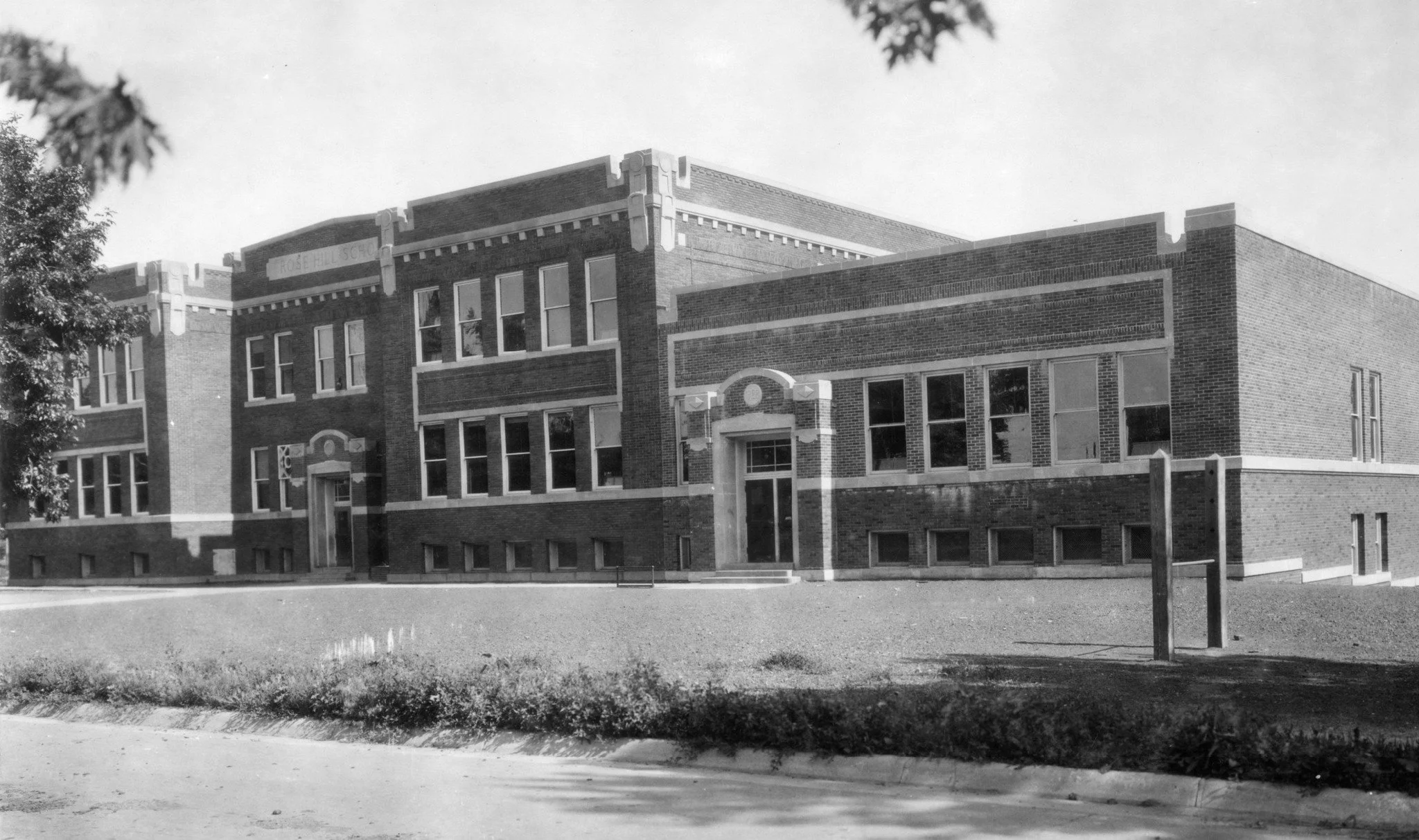
STORY #14: A Selling Point – Nearby Schools
Why Schools Sold the Country Club Neighborhood
When developers began marketing the new Country Club District in the 1920s, they didn’t just sell winding streets and beautiful homes — they sold education
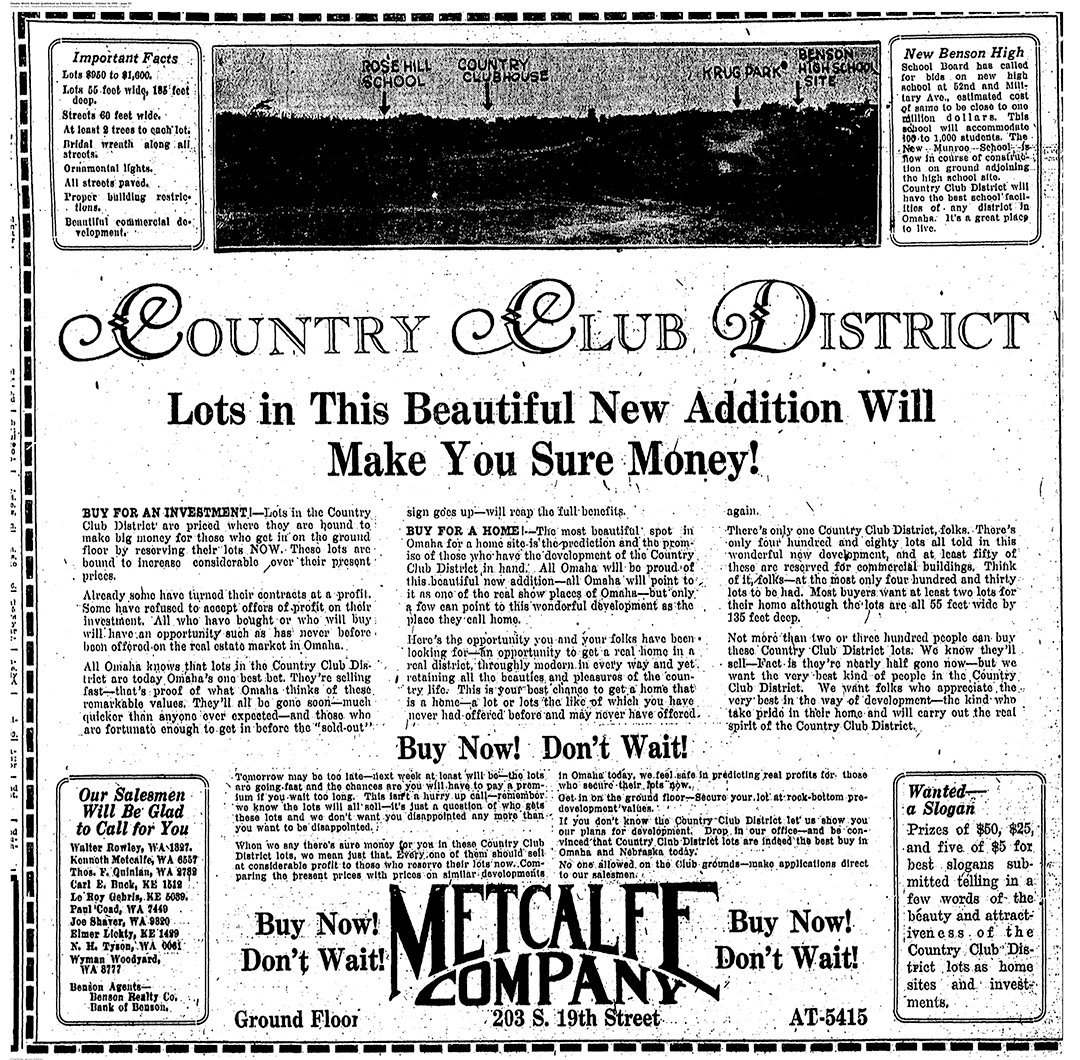
STORY #13: Selling the Dream: What Did You Buy in the Country Club District?
When the Metcalfe Company platted the Country Club District in late 1925, they weren’t just selling land — they were selling a vision of modern living